Written by the TreassureGuide for the exclusive use of the Treasure Beaches Report.
 |
| Recently Dug Kerosene Railroad Signal Lantern or Lamp. |
Wanting to get some more experience with my Manticore, I took it back to the site I worked a little while Wednesday and, "Surprise, Surprise," uncovered the Kerosene railroad signal lamp shown above. I wanted to do a little more learning with the 2D ID map system, but I didn't think anything could have prepared me for this. That is the thing about digging up old artifacts. They can be hard for any metal detector to identify. I never guessed what I would see no matter how I studied the detector's displays. Nonetheless, I was happy and surprised to see what I uncovered. The other detectors had detected a lot of junk in that area but I never dug it all up. There can always be surprises waiting in the ground.
After a little research, I found the lantern was probably made by Adlake company in the early 1900s. Further support for the date is provided by the blue lantern lens found back in 2021 near where I dug this lantern. The lens was patented Oct. 10, 1905. Here it is.
 |
| Dug Railroad Signal Lantern Lens. |
The lens fits the lantern perfectly. See Treasure Beaches Report: Pt. 2. (2020 and Beyond). : 2/15/22 Report - Little Erosion Already. Bigger Surf Coming. Summary of Glass Railroad Site Finds. Gold Up.
I set out to work with the ID system, but quickly got distracted and came in to do the research. \
I'll try cleaning the lantern a little more and maybe I'll be able to find some of the marks on it.
---
A colossal gold deposit has been discovered deep beneath China's Hunan Province, containing an estimated 1,000 metric tons of gold and valued at nearly 600 billion yuan. This remarkable find places it among the largest known gold reserves on Earth, sparking excitement across the mining industry and global markets. The discovery not only reshapes our understanding of China's mineral wealth but also raises important questions about the future of gold mining, exploration technology, and economic impact.
Beneath the Wangu goldfield in Hunan Province, China, geologists have uncovered what may become one of the most significant gold deposits ever recorded. The estimated reserve exceeds 1,000 metric tons of gold, a figure that places this discovery in rare company worldwide. Only a handful of gold deposits across the globe can claim such extraordinary volumes...
Here is the link for more about that.
---
Back in the fifties there were ads in comic books and other publications for children to sell cheap products, many of which didn't really work or weren't quite what they were advertised to be, but the thing I recalled is that some of those requested payment in postage stamps. So instead of sending currency, the buyer would pay in postage stamps. The products were crazy little trinkets. Although I distinctly recall that, I remember one neighbor boy sent for x-ray glasses. I haven't been able to find anything on the internet or from AI about using postage stamps to pay for mail order products. I wondered if anyone else remembered that.
My research on that topic led to something very interesting even though it wasn't what I was originally thinking about.
The Birth of Postal Currency
The outbreak of the Civil War in 1861 led to widespread hoarding of coins, which were made of precious metals like gold and silver. As a result, small change became scarce, making everyday transactions challenging. To address this issue, the US Treasury Department devised a temporary solution: postal currency, also known as postage currency.
Postal currency was introduced in 1862 and initially consisted of stamps affixed to small pieces of paper. These makeshift notes were intended to act as a substitute for coins in small transactions. However, the fragility of the paper and the inconvenience of handling stamps led to the development of more durable and practical alternatives.
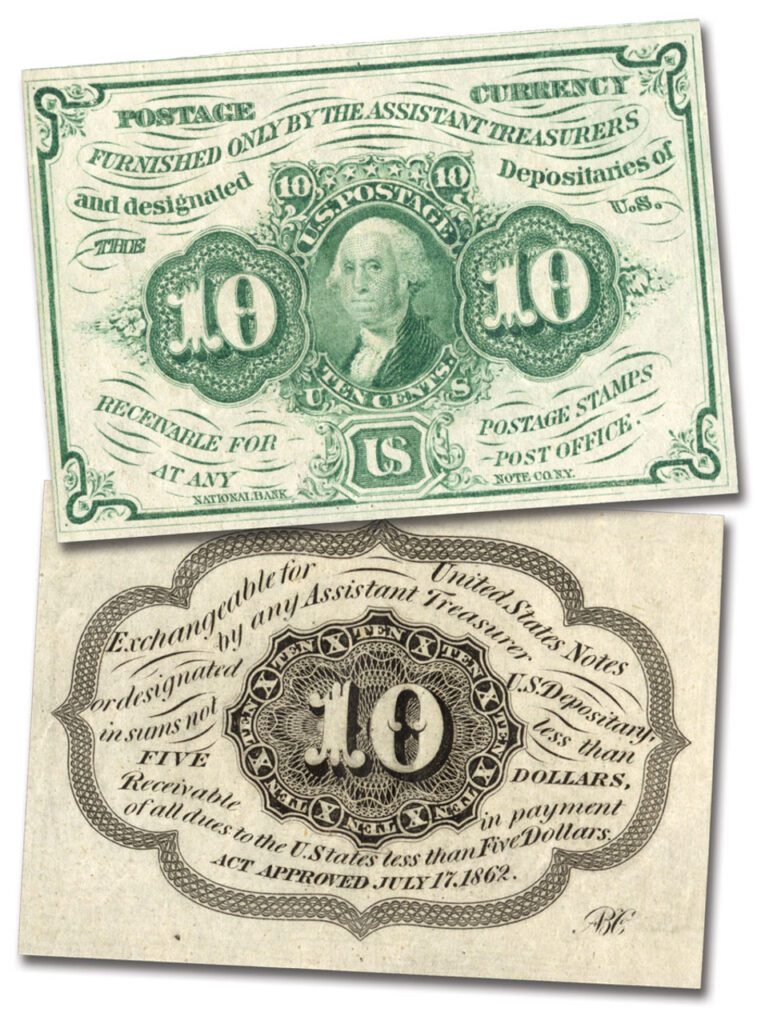
For more about that here is a link.
And here is the beginning of another article on that topic.
During the Civil War, the American economy was in complete disarray. Because of a severe shortage of coinage throughout the nation, many people started using various forms of payment for their daily necessities. Copper tokens, partially or entirely modeled like U.S. cents, were widely used.
On July 17, 1862, Congress signed into law an act that gave the Treasury Department the authority to issue “postage currency.” The postage currency utilized the then-current postage stamp design, printing them on Treasury paper. People generally interpreted this to suggest that postage stamps could be used as legal tender, but the fragile stamps were not suited for the rough handling that currency typically endured. They were thin and easily damaged, and the glue on the back of the stamp made them stick to hands, the inside of wallets, and anything else they might come into contact with.
People began looking for some way to carry the stamps so they would not end up as a ball of sticky paper. They initially put them in envelopes or stuck them to card stock. Needless to say, neither of these methods was workable...
The short circulation and manufacturing period for encased postage can be attributed to a few factors. First, stamps were becoming scarce and unavailable for their original intended use. Second, the encased postage “coins” were expensive, especially in small denominations. A one-cent piece costs three cents to produce. Finally, the number of businesses wanting to purchase encased postage for its advertising value was limited...
Here is that link.
Numismatic Oddities: How Postage Became Currency in the Civil War
---
 |
| Surf Chart from SurfGuru.com. |
Looks like a front will be coming through and increasing the surf for a day. Why does it always seem to happen when I have other commitments on my calendar? Jeeez.
Good hunting,
Treasureguide@comcast.net