Search This Blog

Tuesday, December 7, 2021

12/8/21 Report - Rock Worth More Than Gold. Paraloid Acrylic B72. Density of Metals Table.


Written by the Treasureguide for the exclusive use of the Treasure Beaches Report.


Man Keeps a Rock For Years, Hoping It's Gold. It Turned Out to Be Far More Valuable

22 NOVEMBER 2021

In 2015, David Hole was prospecting in Maryborough Regional Park near Melbourne, Australia.

Armed with a metal detector, he discovered something out of the ordinary – a very heavy, reddish rock resting in some yellow clay.

He took it home and tried everything to open it, sure that there was a gold nugget inside the rock – after all, Maryborough is in the Goldfields region, where the Australian gold rush peaked in the 19th century.

To break open his find, Hole tried a rock saw, an angle grinder, a drill, even dousing the thing in acid. However, not even a sledgehammer could make a crack. That's because what he was trying so hard to open was no gold nugget. As he found out years later, it was a rare meteorite...


Here is the link for the rest of the story.

Man Keeps a Rock For Years, Hoping It's Gold. It Turned Out to Be Far More Valuable (sciencealert.com)

Thanks to SuperRick for the link.


As I've often said, "When you don't know for sure, keep it."

---

Conservation is an important step for many types of finds, including some types of fossils.  I am about to try is Paraloid acrylic B72.  I'll let you know how it works.

Paraloid B72 (acrylic polymer) can be used in the consolidation of wall paintings (1-5%); ground and pigment layers on oil paintings (5-10% in either toluene or isopropanol); fragile wood in furniture, polychrome sculpture etc (5-20%); to consolidate worm holes in wooden artifacts (30%); to consolidate plaster on ceilings (ideally two coats at 15% solids or one coat of 25% solids); as a fixative for chalk, charcoal and pencil marks (2-4% in toluene or isopropanol); as an adhesive for glass and ceramics (in acetone); as a varnish to fix identity markings on historical artifacts (20% in acetone); and with microballoons as a filler.

Paraloid B-72 is a thermoplastic acrylic resin manufactured by Rohm & Haas, which has replaced PVA in many applications and is preferred by many conservators over PVA. Previously known in the United States as Acraloid B-72, it is now only available under the Paraloid name. It is a methyl acrylate/ethyl methacrylate copolymer and is an excellent general-purpose resin. Durable and non-yellowing, Paraloid B-72 dries to a clear transparency, with less gloss than PVA, and is resistant to discoloration even at high temperatures. It is very durable and has excellent resistance to water, alcohol, alkalis, acid, mineral oil, vegetable oils, and grease, and it retains excellent flexibility. Paraloid B-72 can be applied in either clear or pigmented coatings by a variety of application methods and can be air dried or baked. It has a very low reactivity with sensitive pigments. Furthermore, it is compatible with other film-forming materials, such as PVA and cellulose nitrate, and can be used in combination with them to produce stable, transparent coatings with a wide variety of characteristics. In stronger concentrations, Paraloid B-72 can be used as a glue (see Koob 1996 for details). This glue formulation is the standard glue used at the Conservation Research Laboratory at Texas A&M University.

Paraloid B-72 is unique in possessing a high tolerance for ethanol, e.g., after being dissolved in acetone or toluene, up to 40 percent ethanol can be added to the solution to control the working time. This property allows its use in applications where strong solvents cannot be tolerated. The alcohol dispersion may be cloudy or milky; however, clear, coherent films are formed upon drying. Friable surfaces of porous, salt-contaminated objects can be stabilized with Paraloid B-72 while the salts are being diffused out in water baths without the adverse effects resulting from the use of soluble nylon discussed below.

Source: TAMU conservation manual.

---


Different metals have different densities, and the density difference between some metals is huge. For example, the most dense metal is Osmium (Os), with a density of 22.59 g/cm3, which is 42 times that of the least dense metal Lithium (0.534g/cm3).

The density of common metals such as iron is 7.87 g/cm3, mild steel is 7.85 g/cm3, stainless steel is 8.0 g/cm3, aluminum is 2.7g/cm3, copper is 8.93 g/cm3, gold is 19.3 g/cm3, silver is 10.49 g/cm3, for more metals, please view the metal density chart and table below.

You can find a extensive  list of materials and their densities by using the following link.  

Density of Metals, All Common Metal Density Chart & Table PDF (theworldmaterial.com)


---


There is some hint of a larger surf several days out.  This many days away you can't count on it happening.  We'll see if it doesn't disappear like these types of long-range predictions often do.

Happy hunting,

TreasureGuide@comcast.net

Monday, December 6, 2021

12/6/21 Report - Pre-Columbian Mexico Metallurgy. 16th Century Aztec Altar. Detectorist Finds Hoard.


Written by the TreasureGuide for the exclusive use of the Treasure Beaches Report.


Pre-Columbian Metallurgy
Source: See Zoesaadia.com link below.

Below is an excerpt from Metallurgy in Pre-Columbian Central Mexico, a brief, enjoyable and informative. article on a web site about pre-Comlubian America.

Axes were made from copper or bronze, mostly for symbolic use as it seems. Those were cold-worked, annealed, then cold-worked again. Copper (like silver and gold) is not an optional metal for cutting wood, but naturally occurring copper, due to its metallic impurity, can be relatively hard, useful for splitting wood. However, even such axes lost their edge quickly and needed to be reshaped. Bronze alloy axes became wide spread in Post Classic period (after 1200 AD). Tin-bronze, copper-arsenic and copper-arsenic-tin were added to enhance the tool. Those were three times thinner at the edge and harder, made by pouring molten alloy and into the mold (Florentine Codex), then shaped by hammering and annealed and cold-worked again to harden them.

Needles and awls, hoes, fishhooks, digging stick-points, thin leaf-like objects were made out of arsenical copper, usually cold-worked and annealed, sometimes used as tribute payment. Copper bells and later on bronze bells were created for decorative purposes, their shapes vary from round, to oval, to cylindrical, with suspended ring at the top and a narrow slit opening at the base, with loose clapper made of metal, ceramic or pebble. Such bells sported beautiful, elaborated designs. Some were made from coiled threads of wire, forming complex vertical and horizontal patterns. The original models for these belts were made entirely out of wax, winding piece of wax thread around a clay core...

Here is the link for the entire article.

Metallurgy in pre-columbian Central Mexico – Pre-Columbian Americas (zoesaadia.com)

That kind of information could come in handy ir you find a piece that you are wondering about.

---


Archaeologists in Mexico have uncovered an altar dating back to the 16th Century near Plaza Garibaldi, the square in Mexico City famed for its mariachi musicians.

The altar dates back to the time after the Spanish conquest of the Aztec capital Tenochtitlán...

The altar dates is thought to date back to the period between 1521, when Spanish conquistador Hernán Cortés defeated the Aztec ruler of Tenochtitlán, and 1610.

The battle of Tenochtitlán is seen as the beginning of the end of the Aztec empire, which in its heyday ruled over the central Mexican highlands..
..


Here is the link for more about that.

Aztec altar with human ashes uncovered in Mexico City - BBC News

---


Milly Hardwick, a 13-year old in England, found a treasure trove of Bronze Age artifacts on the countryside using a metal detector, the New York Times reports. She had been out with her grandfather and father, who were each equipped with their own detector, scanning the fields when Milly’s detector started to give off a high-pitched sound. Her father immediately began digging and unearthed a 3,000 year-old ax.

“I was just shocked,” Hardwick said to the New York Times. “We were just laughing our heads off.”

Hardwick’s family would end up unearthing 65 artifacts, including ax heads, cake ingots, and blade fragments. Alerted by the Hardwick find, archaeologists with Oxford University found another treasure trove of 135 artifacts some eight feet away from where Milly first found the first ax...


Here is the link for the rest of the story.

https://www.artnews.com/art-news/news/teenager-finds-bronze-age-artifacts-1234612296/ 

Thanks to William K. for that link.

---


Source: MagicSeaWeed.com


Nothing exciting there.

I mentioned Surfline a day or two ago.  You can check it out and see which you like the best.  Here is that link.

Treasure Coast Surf Forecast: 16-Day Surf Report & Live Cams - Surfline

Or if you want, here is something more detailed.

Nearshore Wave Prediction System (noaa.gov)\


Happy hunting,

TreasureGuide@comcast.net

Sunday, December 5, 2021

12/5/21v Report - $600,000 Found By Plumber in Church Wall. Surf Forecasts: Accuracy and Usefulness.


Written by the TreasureGuide for the exclusive use of the Treasure Beaches Report.


HOUSTON (AP) — For more than seven years, no one has known what happened to $600,000 in checks and cash that was stolen from a safe at Pastor Joel Osteen’s Houston megachurch, which has one of the largest congregations in the country.

Now, there’s a possible plot twist in the case: The money might never have left the church and a plumber could have helped solve the mystery.

Houston police are investigating whether cash and checks discovered by a plumber during repair work that was being done at Lakewood Church is connected to the money that was stolen in 2014.

Here is that link.

Plumber's find possibly tied to 2014 Texas megachurch theft | AP News

---


I give you the surf forecast from MagicSeaWeed in almost every post.  While there are several factors you will want to consider when deciding when and where to metal detect, for me the surf forecast is among the most useful.   

Like other forecasts, the surf forecasts are not 100% accurate, but it is a matter of probabilities.  If a 2 - 3 foot surf is predicted, you might actually get a 4 or 5-foot surf, but not likely an 8-foot surf.  And that makes a big difference.  Although there are other factors involved, you have a much better chance of finding good beach conditions after an 8 foot surf than after a 2-foot surf.  I've proved that to my own satisfaction for sure.   You can find something good at any time, but sometimes it is much more difficult and you'll spend a lot more time for meagre results.  You can detect every day for months during a summer like the one we just had with no storms or much of anything to stir things up, and you'd be lucky to find much of anything old.  It is no coincidence that most good old things are found after rough seas or a good northeaster, as history proves. 

A foot or two of surf might not mean a whole lot for metal detecting, but several feet can definitely make a big difference.  As a result, a small forecast error is not very important.  I tend to divide the surf into a few categories; small, medium and large, and maybe very large.   That would be something like 1 - 3 feet, 4 - 6 feet, and 7 - 9 feet and up.  Then the tides should be considered, as should the wind direction and other things which can either increase or decrease the effect and your chances.  And some locations will be affected more than other areas due to things like the angle of the beach, the starting conditions and nearshore reefs or shoaling. 

But how accurate are the surf forecasts?  It isn't as easy to answer that question as you might think.  To determine the accuracy of the forecasts you have to compare the forecast with what actually happened, which isn't as easy as you might think.  You might measure the forecast size and periods with data from buoys, but buoys generally provide open ocean data while what surfers and detectorists are interested in nearshore data.  

There is a big and serious business.   Commercial shipping, the military, and oil exploration companies pay a lot of money for surf forecasts.  They take the data seriously.   Ben Freeston, Surfline's VP of Data Science said, The nuts and bolts of it is, we want to know things — how big the waves will be, how they’re going to break, what type of conditions to expect — and to dig that stuff out, we have to take huge sets of data that weren’t created for surfers and transform them. In many cases, this information was created for oil exploration, commercial shipping or military use. So our goal is to take these data sets that exist for other purposes and turn it all into something relevant to surfers. This means ingesting massive amounts of information from satellites, ocean wave models, sensors and reporters to help us on the journey to producing surf forecasts.

Freeston, who works for a competitor to MagicSeaWeed, has several articles online about measuring and improving the accuracy of surf forecasts.   

(Source: How Surfline is Redefining Surf Forecast Accuracy -- And What Comes Next - Surfline)

You might remember me commenting several times on what I thought was a systematic error in the MagicSeaWeed forecasts.  Large surfs predicted multiple days out very often disappeared over time.  I also mentioned that they seemed to correct that to some extent.

Below is a brief excerpt from an article on MagicSeaWeed.

The bulk of our forecasts start life as the output of the NWW3 Model. This computer model is a third generation swell forecast model. That's to say it's the third in a series of attempts by meteorologists to forecast swell mathematically from observed conditions using a forecast of surface winds around the globe. It's very sophisticated in the way it does this and is fed every six hours by thousands of actual observations from satellites, buoys, ships, weather stations and aeroplanes as the starting point for it's predictions. It's regarded as one of the most sophisticated models of its kind and is routinely used for shipping forecasts for both commercial and military planning. The full 'validation' giving a wealth of technical reports on the percentage errors etc. can be found here:

http://polar.ncep.noaa.gov/waves/validation.html\

Here is another excerpt from the same source.

Recently we've started improving many of our forecasts with the addition of a complex nearshore modelling tool that allows us to take this open ocean data and predict how it will be transformed right up to the beach, giving an accurate idea of the size of the swell coming right into the surf zone. This allows us to take the highly accurate (see link above) NWW3 model and make the results immediately relevant to a surf session. We're currently building our own accuracy statistics from this compared to certain key wave buoys located just outside the surf zone and so far the results are impressive.

And finally.

The second issue is range and detail of the forecasts. For about the first three days the forecast is at it's most accurate. During this period you can with some confidence use the data as part of the information required to plan trips and travel and the three hour details are quite relevant. As you move into 3-5 days the predictions will start to change more as time progresses and to expect the three hour details to be accurate is less and less reasonable. Between 5-8 days the forecast enters its 'experimental' stage. This means that small errors creeping into the model will mean it's likely that the actual conditions vary more widely from the forecast - it becomes more inaccurate...

Here is link to another article by Freeston in which he discusses how they are measuring forecast accuracy and improving their forecasts.

Surf Forecast Accuracy. Building an accurate surf forecast… | by Ben Freeston | Surfline Labs | Medium

And here is a chart showing the average error for over a six-day period at one location - less than one foot six days out.

Of course they are not going to present something that makes them look good relative to their competition.


From Surfline Labs.

So, are the surf forecasts accurate?  Not totally, but accurate enough that I find them very helpful, especially when considered along with other factors.\

Like all data, it is most useful when you learn to use it effectively.

---

Happy hunting,

TreasureGuide@comcast.net


Saturday, December 4, 2021

12/4/21 Report - Important Artifacts Suggest Melbourne Wreck From 1715 Fleet. Three Coins Sold For Over Three Million.


Written by the TreasureGuide for the exclusive use of the Treasure Beaches Report.

Silver Platter From Melbourne Wreck
Source: See seafarerexplorationcorp link below.

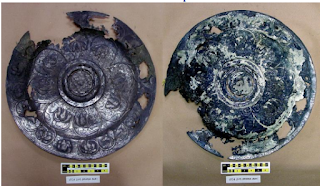
Here are two important diagnostic artifacts from the Melbourne wreck that suggest the wreck was part of the 1715 Fleet and possibly being from the Conception.


Pistol Showing Name Ramirez and Date of 1709.

Both photos are from The Melbourne Beach Shipwreck: A Missing 1715 Fleet Vessel, by Dr. Robert H. Baer, Professional Archaeologist, Seafarer Exploration Corporation.

Here is the link to the complete report. 

Dr.-Robert-Baer-Melbourne-Beach.pdf (seafarerexplorationcorp.com)

You will find much more in that report that you will want to see.  Maybe I shouldn't have posted it right after the link to the Mel Fisher Research Archives, which can keep you busy for quite a while.

I'll add this link to my reference list too.

---

A Las Vegas coin collector has received a record $13.35 million for three rare U.S. coins originally worth a face value of $1.15...

“The PCGS Price Guide estimated the combined value of the ‘Big Three’ at $10.85 million, but I happily paid 23 percent more, $13.35 million, for the once-in-a-lifetime opportunity to get the Holy Trinity all at one time. Each of the three coins set a new record price,” Russell said.

Before Morelan’s and Russell’s acquisitions of the 1804 dollar, 1894 San Francisco dime, and 1913 Liberty Head nickel, only a few other collectors are known to have owned examples of all three. They included the late owner of the Los Angeles Lakers Jerry Buss (1933-2013) and the late Baltimore financier Louis E. Eliasberg Sr. (1896-1976)...


Here is the link for more about that.

Las Vegas collector sells 3 coins for $13.35M | Las Vegas Review-Journal (reviewjournal.com)

Thanks to SuperRick for that link.


===

Source: MagicSeaWeed.com.


Only a one or two foot surf on the Treasure Coast today.  

We are having some bigger high tides.  Too bad the surf isn't bigger.

Happy hunting,

TreasureGuide@comcast.net


Friday, December 3, 2021

12/3/21 Report - Much That You Will Want To Read in the Mel Fisher Research Archives. Melbourne Beach Wreck Finds.


Written by the TreasureGuide for the exclusive use of the Treasure Beaches Report.


I have a lot to talk about today but will have to select one small part of it to post today.  There is so much that it will take me many future posts to cover it all.

 I'll start by giving you a link to the Mel Fisher research archives.  That will give you enough information to keep you busy for weeks, whether you are a long-time hard-core detectorist or a very recent beginner.

In the 256 pages, you'll see Atocha and Margarita target dispersal patterns, detailed illustrations and information on fascinating artifacts, research on new detecting technologies, and much more.  

There is some redaction, but not much.  I'm sure you'll find a lot of good information.  

I was pleased to find that some of the things I talked about years ago are being implemented.  Public access to this type of archaeological information is improving.  I suggested long ago the creation of virtual museums which can be accessed online and that is being accomplished to some extent.   In the past I complained that much of the work conducted by archaeologists "for the benefit of the public" was not available to the public.  I've seen some progress in that area however much archaeology is still published only in expensive books and journals that the public never sees.

I was also proud to see that some of the nautical archaeology resources that I've posted in past years was also published in the Mel Fisher research archives.  For example, you will find the Muckelroy model of dispersion processes in some of my previous posts and also in the Mel Fisher Research Archives.

Here is one post in which I previously gave you a link to the Muckelroy model.

The Treasure Beaches Report Direct From Florida's Treasure Coast.: 2/12/19 Report - 1715 Fleet Site In Melborne. Shipwreck Dispersion and Scatter. Muckelroy Model. 

Anyhow, I'm sure you will enjoy browsing through the material in the Mel Fisher Research Research Archives link.  

For your convenience, I also added that link to my reference links list.

Here is that link.

AtochaMargarita2016-2018PermitRenewalReportv2019-01-14_Redacted.pdf (melfisher.com)

Thanks to DJ for the link 

===

I should also point out that the same Treasure Beaches Report post mentioned above also refers to  Melbourne beach finds, and during the 2021 salvage season, 1715 Fleet finds were made off Melbourne beach.

To remind you here is what I reported about that in 2-19 about that.


Here is the Executive Summary and Conclusion of an article that you might enjoy reading. It is by

Dr. Robert H. Baer, Professional Archaeologist, Seafarer Exploration Corp.

Executive Summary This paper provides evidence that the Melbourne Beach shipwreck scatter is derived from one of the missing Spanish 1715 Plate Fleet shipwrecks, the Santisima Trinidad y Nuestra Señora de la Concepción.

Conclusion From the evidence, it is concluded that the diagnostic artifacts – the Monteros Platter and the Ramirez Flintlock Pistol recovered at the Melbourne Beach site approxiamately 14 miles north of the 1715 shipwreck sites is undoubtedly cargo from a missing 1715 shipwreck. It is believed that the vessel scatter at the site is that of the Santisima Trinidad y Nuestra Señora de la Concepcieon, the vessel that transported the consigned box of presents including the Monteros Platter from Veracruz to Havana and from Havana to the Florida Treasure Coast where it was recovered almost 300 years later.

Here is the link if you want to read the entire article.

http://seafarerexplorationcorp.com/wp-content/uploads/2018/01/Dr.-Robert-Baer-Melbourne-Beach.pdf


---

We are having some nice big tides now but the surf is down around two to four feet.

I'm sure the Mel Fisher Research Archives will keep you busy for a long time.

I have a long list of additional topics for future posts.  

Happy hunting,

TreasureGuide@comcast.net


Thursday, December 2, 2021

12/2/21 Report - Florida's Fossils. Important Pendant Find. Bronze Age Hoards. Wrought Iron Hand Tolls From 17th Century Port Royal.


Written by the TreasureGuide for the exclusive use of the Treasure Beaches Report.


A gold Bronze Age pendant, described as one of the most important finds of the last 100 years, has gone on display for the first time.

It was discovered on farmland in Shropshire by metal detectorist Bob Greenaway in May 2018.

"I knew it was something special, but I didn't know it was going to be as special as it was," he said.

Mr Greenaway said he loved history since he was at school and began metal detecting nearly 25 years ago....


Here is the link for more about that.

Metal detectorist's Bronze Age find on display for first time - BBC News

---

About 200 artefacts have been unearthed after two Bronze Age hoards were found by metal detectorists.

A 13-year-old girl uncovered a hoard of about 65 axes and other items on her third detecting trip in a field near Royston, Hertfordshire, and another hoard was found close by.

Archaeologists excavated about 200 items from the adjacent sites.

The council said the hoards could be related and both were being treated as potential treasure.

The items were being sent to the British Museum where experts will examine them...


And here is that link.


Two Bronze Age hoards found on farm near Royston - BBC News

---

Here is a good thesis on wrought iron hand tools from Port Royal.  Might help you identify some finds.

Wrought Iron Hand Tools From The Underwater Arcaheological Excavations of Colonial Port Royal, Jamaica, Circa 1692, a thesis by Katie Custer is worth browsing.  232 pages with many helpful illustrations.

Here is the link.

Custer-MA2004.pdf (tamu.edu)

---

You might not think of Florida as having great fossils because they don't have dinosaurs, but they do have fossils.

Fossils can be found everywhere in Florida. They are found in limerock, beach sand, riverbeds and phosphate mines. Florida is known for its rich fossil record and is acknowledged as unique in North America for the number and variety of vertebrate fossils that have been found.

Many areas of North America have no fossils. Fossils that are found in other areas are mostly of invertebrate specimens such as mollusks, corals or crinoids. Any vertebrate fossils that are found are usually encased in rock and hard to reach and dig out. This makes Florida’s land vertebrate fossils from the Oligocene, Miocene and Pliocene periods extremely important because they are so rare elsewhere in eastern North America...

Here is that link.

Fossils: What They Tell Us About Floridas Natural History (floridapoly.edu)

If you want to collect fossils, you should get a fossil permit from the state.  I've written about that before.  

You don't need a permit to collect shark teeth.

---


We're starting to get some bigger tides now, but the surf is small.

Happy hunting,

TreasureGuide@comcast.net


Wednesday, December 1, 2021

12/1/21 Report - Another Part of Treasure Hunting. Keeping Your Eyes and Mind Open. Gold Mining and Artifacts of the MikMawk.


Written by the TreasureGuide for the exclusive use of the Treasure Beaches Report .


Real Eight Company Stock Certificate
Submitted by Alberto S.  

Alberto sent me this photo of a Rea Eight Company stock certificate that he bought.  There is a lot involved with salvage operations that detectorists don't think much about.  There are investors, leases, contracts, government regulations, etc.  There can be disputes and legal issues between any of the involved parties.  There were some of those this past year.

You might remember when Odyssey Marine Exploration had to give, what was reportedly a half billion dollars of silver and gold cons to Spain after Odyssey did all the archaeology and salvage on the Mercedes.   Odyssey, which did a lot of treasure salvage and archaeology, up until that time, pretty much left the treasure salvage business and became an undersea mining company.

See  News - Odyssey Marine Exploration Inc

One of their current projects is a gold mining operation in New Guinea.

On the subject of archaeology and regulations, the archaeologists on Oak Island discovered a piece of Mikmawk pottery.   Of course something happened on the island.  Surprising how little they've discovered in the years they've done every thing but turn every inch of ground over.  They (the archaeologists) discovered some items from the indigenous peoples who were on the island thousands of years ago.

I mentioned when they discovered the round stones that they could possibly be something otter than cannon balls or shot.  They could be stone shot, but it is wise to stay open to all the possibilities, including those that don't fit your hopes and dreams or your favorite narrative.

The first photo I found when I started to look up information on the Mikmawc is shown below.


Mi'kmaq Culture

For ten thousand years, this rugged, sea-swept peninsula has been home to the Mi'kmaq people. Mi’kmaq and First Nations people have enriched this province with their legends, art, music, spirituality, history, and language.


What is on that plate?  That is about the first thing I noticed.  Unfortunately it doesn't tell us, but it looks a lot like it could be stone balls.  And there are a couple piles of sticks.  I don't think they are eating meatballs with chop sticks.  Seems to me they could have some sort of cultural artifacts there, which would more be relevant to the picture than gum balls or meatballs.  

 I need to do a little more research.

Note: You'll find the name of the indigenous peoples spelled a variety of ways online.


Then just as coincidentally, I find the following photo.


So here is a piece of quartz found in an archaeological connection with the Mikmawk along with sone little pieces of shiny yellow stuff.  Wonder what that could be?

(Reminds me of the time I took a geology tour in Yosemite.  The tour guide said, "Thankfully gold has never been discovered in Yosemite, otherwise the park would have been ruined."  On the way into the park, there were divers dredging for gold in the river not very far from the park.}

I believe that I noticed somewhere that the Mikmawk did mine gold.

This part of the story of the island could have gone undiscovered for many more years if it weren't for the investigative techniques of the archaeologists that became involved.  

This line of investigation might or might not have anything to do with the treasure being sought, but it is an important part of the picture and could help correctly identify other finds.  If they leave out the indigenous peoples and activities they are missing an important part of the picture.

The more broadly you are informed, the more you will find.  Things have been going on in your area for hundreds of thousands of years.  If you keep your eyes open and keep your mind open, you might find more than you ever thought of looking for.

There are many more lessons there, but I'm done for today.

Happy hunting,

TreasureGuide@comcast.ne