Search This Blog

Monday, January 23, 2023

1/23/23 Report - One Detectorist Makes Amazing Find. Ian and Nicole Effects Still Seen. Florida Fossils.


 Written by the TreaureGuide for the exclusive use of the Treasure Beaches Report.
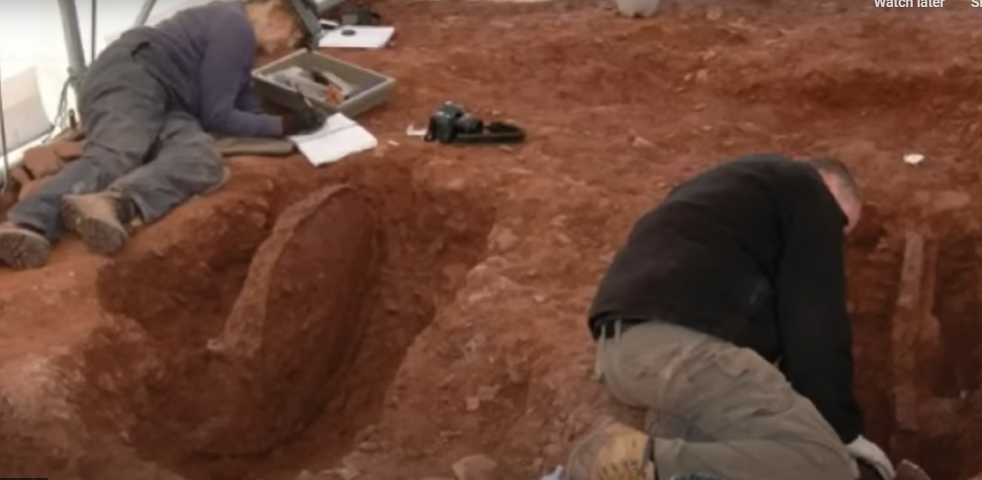

Uncovering Buried Chariot.
Source: see link below.

A detectorist found a chain which led to unbelievable finds. 

Here is the link for the entire story.

Man Finds Old Buried Chain on Farm, Pulls Up Something Incredible (thearchaeologist.org)

Thanks to William K. for that link.

---

Last year we had Ian and Nicole.  They caused a lot of erosion in some areas.  Though not so much on the Treasure Coast, Ian cut islands in half and did massive flood damage to inland as well as coastal areas.  The erosion to inland waterways such as the Peace River undoubtedly washed out more old fossils and uncovered more historic artifacts than any other time in at least the last ten years. I haven't been keeping up those areas beyond the Treasure Coast, but I'm sure there are many areas of Florida that still show the effects of those storms and are producing old items that were uncovered months ago.

There is a very interesting web site (link immediately below) that shows some of those areas.  One fascinating interactive illustration shows Peace River area as it looked from overhead both before and after Ian.  You can see how high the water got as compared to just before the storm.  When the high water drops, good finds are always made, but Ian took it to a new level.  There were a lot of areas in Florida similarly affected, and I'm sure that you can still benefit by looking at some of those areas that were hit hard months ago.

Here is a link that will allow you to compare water levels of both coastal and inland waterways before and after Ian.

How Hurricane Ian swamped Florida rivers: Before-and-after photos show record floods (tampabay.com)  

And here is a link that will tell you more about the fossils of the Peace River.  

Peace River Paleo Project (PRiPP) – Vertebrate Paleontology Collection (ufl.edu)

You can find many of the same types of fossils along the Treasure Coast.  There are times when they wash up on the Treasure Coast beaches, where you can find everything from microscopic fossils to mammoth fossils.

Some of the areas that opened up after Nicole were changed forever.  Although beaches have refilled, dunes were cut back that won't fully recover.  Even if renourishment sand is dumped in front of those cliffs, sand layers have been displaced and some artifacts have been moved and then covered once again in new locations. 

Big and Small - Partial Rabbit Jaw
In Front of and Mammoth Tusk Section -
Both Found on Treasure Coast Beaches.

If you are interested in really old things that you can find in Florida and on the Treasure Coast, read down through this web site.  It presents lists of the types of fossils in the Florida collection, along with a lot of other interesting information.

Peace River Paleo Project (PRiPP) – Vertebrate Paleontology Collection (ufl.edu)

If you want to get a good start in fossil collecting, you can pay for a guide with a state permit to take you on a fossil hunt.  That is a good way to really shorten the learning curve.  Then you can get a fossil collecting permit of your own.  You will probably learn something about finding other types of old things in the process.  If you are getting into fossils, you are getting into old material and other types of finds will be available nearby.

---

Grand Canyon in Arizona, U.S. has been a witness to many ancient animals walking through it. Hence, it's not a surprise to find fossilized tracks. But one of such footprints — about 313 million years old — is of particular significance. The tracks are the oldest-ever recorded in Grand Canyon National Park...

Here is that  link.

Scientists Discover 313 Million Years Old Footprints From Fallen Boulder in Grand Canyon (ibtimes.sg)

---

Yesterday tens of thousands joined the March for Life event in Washington, D.C., but I saw nothing of it on the news other than on EWTN.  

---

Source: MagicSeaWeed.com.

We are also going to get some good low tides Monday.  

Good hunting,

TreasureGuide@comcast.net


Saturday, January 21, 2023

1/22/23 Report - How Inspecting Modern Coins Will Help You With Spanish Colonial Coins. Metals Prices. Van Dyck in Barn.


Written by the Treasureguide for the exclusive use of the Treasure Beaches Report.

Wide and Narrow AM on Modern One Cent of Same Year.
Source: Close AM / Wide AM (lincolncentcollection.com)

I've been talking a lot about 16th century coins lately, but am going to the other end of the spectrum today

After my dad died several years ago, I found a tin full of pennies he had accumulated.  A lot of them were wheat cents. I decided to inspect them to see if I could find anything interesting or valuable.  I got the book Striking It Rich Through Pocket Change:by Ken Porter and Dr. Brian Allen.  As the title suggests, it isn't about old coins, but coins that you might commonly find in pocket change.  That began my searching modern coins for potential erros and varieties.

Searching modern coins is a tedious process, and I didn't find a lot, although I did discover one previously undocumented error coin that is now registered on Wexler's Error Coins and Die Verities (https://doubleddie.com), as well as some other minor mint errors, mostly die cracks.  They are worth a little, but nothing very exciting.

I found that books were not sufficient for a beginner such as myself.  The online community was necessary to help distinguish between true error coins and coins that were somehow damaged after leaving the mint.  Most people that think they have found a double die error actually are seeing machine doubling, which is worthless.  See Double Dies vs. Machine Doubling | NGC (ngccoin.com).

I doubt that most detectorists will find searching coin rolls for valuable coins very exciting, but there is always the possibility of finding something good and you can do it on a day when you can't get out to the beach or whatever.  I also hate thinking that a valuable coin passed through my hands simply because I was not informed enough to recognize the value.  I'm sure some good ones have passed though my hands unnoticed.  

What I got from all that is greater skill in inspecting coins and some understanding of the things that can go wrong when I die strikes a planchet to make a coin.  I now understand a little more about die bounce, for example, after seeing it clearly on many modern coins.  It doesn't matter wheather the coin is modern or old - both were made by punching a planchet with a die.  One of course, was made by machine and the other by hand, but you still see many of the same things.  Some were made by fresh sharp die and others by old worn die.  Both will show strike-throughs and over-strikes.  You can usually tell a new scratch from a gash caused by a piece splinter of metal on the planchet when the coin was struck. By inspecting modern coins for varieties and errors, you will learn to more effectively inspect old hand struck coins more effectively.  It makes inspecting old coins more interesting even if you don't find much of value on your modern coins.  Of course, good magnification and lighting is necessary too.

Here is a list of penny errors you might be able to find.  Pennies are a good choice because you can get rolls of them very cheaply.  I hate the zinc pennies though.  They turn to crap.  While I do not enjoy looking at the more modern cons, especially zinc pennies and all those state quarters, I do like to look at coins with some age on them, such as wheat cents, which show a lot of die chips on the reverse if nothing else.  You'll want to look at older coins anyhow to determine their condition.  And like I said, no matter how tedious it is, there is always the possibility of finding something worth a small premium.

Below is a list of some common error pennies with their values (Source: U.S. Error Coins List By Denomination | The U.S. Coins Guide (thefuntimesguide.com).
Floating roof coins is something kind of new.   I never heard of it until recently.  See Floating Roof Pennies - See How Much They're Worth | The U.S. Coins Guide (thefuntimesguide.com

Also you might want to watch for the small and big date coins and the wide AM coins.  See the picture at the top of this post.

---

A Van Dyck paining worth millions was found in a barn.

Here is that link.

------


Palladium declined sharply on Friday while gold, silver and platinum rose modestly. Only gold marked a weekly gain — a fifth straight, and it also scored another nine-month high.

Rising for a second consecutive session, gold for February delivery climbed $4.30, or 0.2%, to finish at $1,928.20 an ounce on the Comex division of the New York Mercantile Exchange. The settlement was gold’s highest since it ended at $1,934.30 an ounce on April 22...

See Gold Logs Fifth Weekly Gain and 9-Month High | CoinNews

---

The surf remains small on the Treasure Coast, but the tides today are supposed to be big.  Hopefully I'll be able to do some bottle hunting.

Good hunting,

TreasureGuide@comcast.net


Friday, January 20, 2023

1/20/23 Report - Maravedi of the Sixteenth Century and the Santo Domingo Mint Previously Found on the Treasure Coast.


Written by the TreasueGuide for the exclusive use of the Treasure Beaches Report.

Maravedi Found by Captain Jonah and Crew of the Capitana in 2019.

Lartely I've been talking a good bit about 16th Century coins found on the Treasure Coast.  The Treasure Coast is most known for its 1715 shipwrecks, and many of the old coins found are from those wrecks.  Therefore, the coins most often date from the early 18th century and later 17th century.  However, there are also older wrecks along the Treasure Coast.

Most of the 1715 beach finds are reales, but in addition to an occasional escudo, medivedis of the 16th century have also been found along the Treasure Coast.  The four-maravedi shown above was found by Captain Jonah and the crew of the Capitana during the 2019 salvage season.  The S to the left of the columns on the reverse shows that it is from the Santo Domingo mint, which was an early New World mint and the Roman numeral 4 on the right side of the obverse gives the denomination.

(See The Treasure Beaches Report Direct From Florida's Treasure Coast.: 3/11/20 Report - Some of The Oldest Coins Found On The Treasure Coast.

Below is an illustration showing the basic design of a Santo Domingo four-maravedi of the second series.  

Illustration of Typical Santo Domingo Four-Maravedi (Second Series)

It matches fairly well the find shown at the top of this post.  The second series dates from 1542 to 1556.  A very early coin.  After the second series a new design was adopted.

A Santo Domingo four-maravedi of the first series is shown below.  You can see it is distinctly different from the second series maravedi design shown immediately above.

Illustration of Typical Santo Domingo Four-Maravedi (First Series).

There are many minor variations on these coins, but the general design remains pretty much the same. 

Maravedis were also produced by the Mexico mint during the 16th century.  They are clearly different from those produced by the Santo Domingo mint.  Below is an example of a Mexico minted four-maravedi of the same period.


16th Century Mexico Four-Maravedis Design.


Made of copper, or should I say bronze, maravedis are not common finds on the Treasure Coast, but, as I've shown, they can be and have been found on the Treasure Coast. 

*The three illustrations are from Sewall Menzel's book, Cobs, Pieces of Eight and Treasuer Coins.

----

Save those pull-tabs.  Look at this.


---

We are still having a small surf.  The tiides are just a little bigger.

Good hunting,

Treasureguide@comcast.net

Thursday, January 19, 2023

1/19/2023 Report - Ancient Shipwreck Found Off Israel. Embossed Bottle. A Teasure Coast Maravedi.


Written by the TreasureGuide for the exclusive use of the Treasur Beaches Report.


14th Century "Good Shepherd" Shipwreck Ring.

Late in 2021, archeologists discovered the remains of two sunken ships filled with a trove of Roman treasures off the Mediterranean coast...

Over the past two months, hundreds of Roman silver and bronze coins were discovered, dating back to the third century. More than 500 silver coins from the Middle Ages have also been found scattered around...


Coins from the Mamluk period that were recovered off the coast of Caesarea. (Photo Credit: AHMAD GHARABLI / Getty Images)© Provided by The Vintage News


There were other interesting artifacts found including bells and a Roman pantomimus that the experts on Ancient Aliens would undoubtedly recognize as a figure of an alien astronaut.

Here is the link.

Remains From 14th Century Shipwreck Discovered in Israel Contain Hundreds of Artifacts (msn.com)

---

Lately I've been talking a good bit about 16th century Spanish colonial coins, but they have all been reales.  Maravedis have also been found, including this one found by Captain Jonah and the Capitana crew during the 2019 salvage season.


Obverse and Reverse of Maravedis Found by Capitana During 2019 Salvage Season.

I'll discuss coins like that more in the near future.


---

I just added the following to tgbottlebar.blogspot.com.


This small embossed HYNSON, WESTCOTT and DUNNING bottle once held mercurochrome, an antiseptic commonly used in the 20th century.  The bottle would have a glass stopper/applier, which is not with this bottle.

I did not find when the company was formed.  They did produce a product, perhaps the same or different product, that was sold in a cobalt blue glass bottle.  I've not found one of those.

Here is a vintage or antique ad for mercurochrome.


You might remember having mercurochrome at home.  It seemed to be common back in my youth.

I don't have an age for this bottle, and I don't know when the company began.  I do know that it was still active into the 1950s.

----

We are still getting an offshore wind and a small surf.

Good hunting,

Treasureguide@comcast.net


Wednesday, January 18, 2023

1/18/23 Report - 16th Century Great Shield Mexico Minted Spanish Colonial Coin Found Last December. World's Oldest Runestone.


Written by the TreasureGuide for the exclusive use of the Treasure Beaches Report. 


Four-Reale Found by Joe R. and Previously Posted on 12/19.

I posted this find back in December after Joe R. sent in the photo.  Joe is having it professionally cleaned by West Bay Trading Company.  He wrote to tell me that and also said he'll send photos after he gets the coin back.  It came out of the ground in great condition, as you can see above.

About that coin, Joe also said, The mint mark is OMO, Mexico mint Philip II minted between 1571 and 1579. It weighed in at 9. 81 grams. Steve said that the coin lost about 1/4 of its weight, which he attributed to being in salt water.

As I've said before, it can be difficult to evaluate coins from photos, and one reason I posted this photo again is to point that out.  From the photo you see above, I would have taken the assayer mark to be G rather than O.

Up until now, most if not all of the 16th century Spanish coin finds that I've shown were of the Pillars and Waves type.  This one, however, bears the Great Shield design.

The O assayer mark would be for Bernardo de Onate, whose assayer mark also appears on coins of the Pillars and Waves type.

Onate worked concurrently with Luis Rodriguez, who used the assayer mark L, so things are not always as orderly and clear as you'd like.

Onate kept the legend KAROLUS ET IOHANA (Charles and Joana) until about 1572, when new dies were introduced.  At that time Phillip II had already been king for about 16 years.  (See the Menzel book.)  I can't read the legend on this coin from the photo.

Below are a couple other Phillip II four-reales that are among many more coins pictured in the Calico book that I talked about yesterday.


Take a look at the example shown above.  You'll notice the mint mark is on the right.  That is not uncommon if you look at a lot of examples.  The mint mark can appear on either side.  By the way the 30.000 is not a value.

On the left of the coin shown above, and it is difficult to make it out, but the denomination appears as a Roman numeral (IIII).  It is to the left of the shield.  The denomination on Joe's coin is in Arabic numerals.  That is another element that can be found either to the right or left of the shield.

And below is another Phillip II four-reale.  Notice once again the oM mint mark and the denomination IIII and the O assayer mark.


On Joe's find, one design feature that really sticks out to me is the curved bowl-like line under the crown.  I haven't found an exact match for that feature in the books I searched so far, but I haven't spent a lot of time looking yet.  I have seen that feature on coins from other mints and even a half-reale.  There are so many types and varieties on Spanish Colonial coins, it seems like an endless variety.

---


COPENHAGEN, Denmark (AP) — Archaeologists in Norway said Tuesday that have found a runestone which they claim is the world’s oldest, saying the inscriptions are up to 2,000 years old and date back to the earliest days of the enigmatic history of runic writing...

Here is the link for more about that.

Norway archaeologists find 'world's oldest runestone' (msn.com)

---

The surf is now back down to around two or three feet, and we have a slightly offshore wind.

Good hunting,

Treasureguide@comcast.net


Tuesday, January 17, 2023

1/17/23 Report - Extensive 1504 - 1868 Spanish Coin Reference. Gold in The Ocean. Decreasing Surf.


Written by the TreasureGuide for the exclusive use of the Treasure Beaches Report. 


In my 1/11/23 post I showed a Mexico 2-reale from the reign of Juana and Carlos that was found on the Treasure Coast.  I also posted some illustrations from a great book on Treasure Coins authored by Sewall Menzel.  Today I want to present another great reference book on Spanish coins.  That book is essentially a vast database of illustrated cobs and coins, including a huge number of varieties. To give an example of how complete the book is, today I the illustrations of Mexico two-reales from the reign of Juana and Carlos.  There are 29 varieties of those listed.  Take a look.


The Treasure Coast found 16th-century coin that I most recently showed (with the O assayer mark) is shown as type (Tipo) 74.  It could be one of two varieties.  Since the mint mark wasn't visible on that coin, I couldn't tell if the mint mark was M or o over M.  So it could be either of those two varieties.  The illustration for both of those varieties shows the O assayer mark as slightly higher than the separation line between the lion and castle part of the shield.  That was something I didn't see in the Menzel illustrations.  Maybe it was there somewhere, but I didn't see it.

The full title of this book is, Monedas Espanolas desde Juana y Carlos a Isabel II 1504 a 1863 by Ferran Calico, Xavior Calico, Joaquin Grigo (1985).  

It is an excellent resource, but as you can see, was published in Spanish.  Fortunately, it takes very little understanding of Spanish.  The bulk of the book consistes of all the illustrations.


I found this clopy in a thrift store many years ago.  Notice, the years included are 1504 to 1868.  That is pretty extensive, and you will find the coins of mints other than the New World mints.

---

There is gold in seawater, but extracting it is prohibitively expensive.  A cubic mile of the ocean has something like $1 million dollars of gold in it.  At least that is what the article says.

Here is the link.

There’s $700 Trillion Worth of Gold in Seawater! Can We Extract It? [Video] (scitechdaily.com)

Weren't they shocked to find gold in the water on Oak Island?  


You can also turn plastic back into oil, but at this time that is also prohibitively expensive too.

---

Here is the Carter's cone ink bottle that I found not too long ago after it was cleaned.


In the first photo you can see a dent in the double ring lip, which I assume was created by a slight accident when the lip was applied.  

 I added some additional Treasure Coast foiund bottles to the tgbottle.blogspot.com site.


Source: MagicSeaWeed.com.

So the surf will start to decrease today.

If we can't get some beach ripping erosion, I'd sure like to see some super low tides. 

Good hunting,

TreasureGuide@comcast.net


Monday, January 16, 2023

1/16/23 Report - Some Treasure Coast Beaches This Morning. Wishing Wells, Superstitions and Customs Resulting in Coin Filled Waters.


Written by the TreasureGuide for the exclusive use of the Treasure Beaches Report.


John Brooks Monday Morning.

I went out early this morning to see how things were shaping up.  There were slow swells parallel to the beaches.  At John Brooks they were breaking right on the beach, but down at Walton Rocks there were some surfers.

John Brooks looked very much like the last time I was out.  The slope was mushy.  there was a lot of Styrofoam scattered along the beach.


John Brooks Monday Morning.

It was cool this morning, but it quickly warming up.


John Brooks Monday Morning.


You can see the wind blowing the tops of the waves and the deep footprints in the mushy sand.


John Brooks Monday Morning.


The other beaches weren't much different.


Blind Creek Monday Morning.


Very few people were on the beach this morning.


Walton Rocks Monday Morning.

Overall beach conditions at these beaches was not encouraging Monday morning.  There were very few targets.

---

Yesterday I mentioned artifacts being recovered from an old "wishing well."  Here is an interesting article on the human impulse to throw coins into fountains, wells and other water.  Of course, there are 

An example of a historical wishing well could be found in the county of Northumberland, located in the northeastern tip of England, which has a very famous well that was used to make offerings to the Roman Britain and Celtic goddess Coventina. The archeological discovery of Coventina’s Well unearthed thousands of coins from different eras of the Roman Empire. About 16,000 coins in all were discovered in this well, including coins issued between the first and fifth centuries (Aitchison, 1988, p. 274-275). The great range of coinage implies that people have been adding coins to the well for many generations. Because the well was found among temple remains, the coins were believed to be religious offerings made to the goddess Coventina. Aitchison points out, however, that most of the coins found in Coventina’s Well were “low denomination bronze issues” (1988, p 275). People who offered coins to the well chose coins that were either worth very little or nothing at all...

The article goes on to examine the continuing practice of throwing coins into wishing wells today.

Here is a link for the entire article.

Anthropology 125s (uci.edu)

If you go to DisneyWorld you will see that the practice is alive and well.  You'll see tons of coins in virtually every body of water as well as in the model train display in EPCOT, in which there are a lot of coins even though the model train layout only has miniature streams and the coins are way out of scale, occasionally derailing trains.  I can never figure that one out.  

For detectorists, it is worth checking virtually any body of water where people may have gathered or passed by.  Not only can you find the intentionally tossed coins, but perhaps also a ring or watch that came off when the coin was tossed.

---

Source: MagicSeaweed.com.

Tomorrow the surf is supposed to peak and then begin decreasing again.

Good hunting,

TreasureGuide@comcast.net