Search This Blog

Tuesday, March 7, 2023

3/7/22 Report - Metal Detecting Fort Pierce Before Renourishment Starts.. A Few Cleaning Tips.


Writtten by the TreasureGuide for the exclusive use of the Treasure Beaches Report.


Equipment For Beach Renourishment Lined Up At Fort Pierce South Jetty Park Yesterday.
Photo by Gaylen C.

Gaylen C. sent me the above photo and following account of his recent outing.

Two things sent me to South Jetty Park today. I downloaded the new update to my Nokta Legend and needed to give it a try, and I read your post about the renourishment project starting this week. This would be my last chance to work that beach before the project started.  Legend worked great. Most coins I have found on a beach hunt, though all modern. And I found a couple of inexpensive earrings. The most interesting thing today though was seeing the heavy equipment poised and waiting to get started. Perhaps this offshore fill will bring in some interesting finds. Got to keep a positive outlook.

Have a wonderful, and blessed week. Thanks for all the great posts.

Gaylen C.  Thanks Gaylen.  What did you learn from the test of your new download?

Fort Pierce South Jetty isn't a bad place for doing a little testing.  If conditions are right you can pick up a lot of modern coins there along with some junk and cheap stuff, but there have been some good old shipwreck items found there as well.  There is the very picked-over shipwreck a little to the south across from Archie's.  There have also been a few centuries old items found in the renourishment sand.  We can hope there will be some good things in the newly arriving sand.

I don't stop at Fort Pierce South Jetty a lot, do remember a few times over the years finding it eroded down to the older sand.  The first time I was digging a lot of old WWII dog tags.  That was years ago.  Any beach is worth hunting when you get down to the older layers, and with all the beach renourishment these days, that can be very infrequent.

One now deceased old time Fort Pierce resident told me how he delivered newspapers and when he had some left he would take them down to the beach where service men involved in WWII training exercises would buy whatever he had left over to burn for warmth after getting cold and wet in the ocean.

---

Canada Dry Quinine Water Bottle In Two Stages of Cleaning.

You seldom get a painted label or ACL bottle that has been in the water for a long time that is in good condition.  This is one of the best, if not the best, that I've found.  The paint can be completely removed or badly damaged.  This bottle when found had a lot of barnacles and oysters shells all over it and even inside.  White vinegar removed most of that.  You can see the remains of one shell inside the bottle at the right after hours of soaking in white vinegar.    After removing most of the shells with white vinegar, the label still had some remaining stains, some or which I removed by lightly scrubbing with cleansing powder.  It could use more cleaning.  

It isn't a valuable bottle, but since it is one of the best ACLs I've ever found in water, I wanted to see how well different things worked.

While white vinegar will dissolve some things, such as the shells, stains might remain inside a bottle.   The inside stains can be removed by tumbling.

The following bottle was first soaked in white vinegar, but still had stains inside, so I put BB pellets inside with some water and dish cleaning liquid and shook it for a while.  It didn't take long to remove most of the inside stains.  Of course, tumbling for a day or two would do a better job.


McCormick Bee Brand Bottle In Two States of Cleaning.

This bottle was soaked in vinegar first.  Stains remained inside (right).  Then BBs with water and dish wash soap was swirled inside for several minutes.  That removed most of the stains inside the bottle.  On the left you see the mostly cleaned bottle, which has some scuffing on the outside, especially just to the right of the trademark symbol.

The BBs swirled with the dishwater solution works fairly quickly on most inside stains.

---

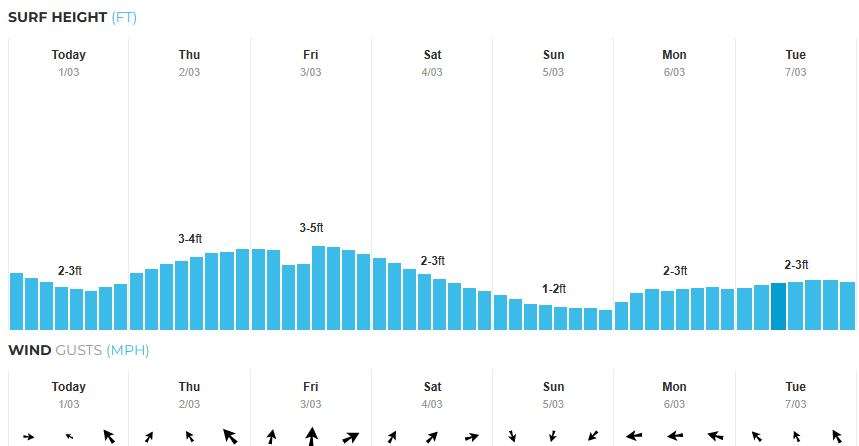
We're going to get a backdoor cold front.  It will come from a different direction.

Source: MagicSeaWeed.com.

Looks like we'll get four to six feet and then more a couple days later.

Good hunting,
Treasureguide@comcast.net


Monday, March 6, 2023

3/6/23 Report - If You Don't Like The Result You've Been Getting, Try Something Different. More On Step-Search Strategy.


Written by the TreasureGuide for the exclusive use of the Treasure Beaches Report.


It is often a good idea to alter your search strategy as you learn more about a site.  On one of my most recent trips to the beach I was covering a lot of ground and not getting any good signals.  I was using discrimination mode to do a quick check even though I'm more of a dig everything kind of guy, but in that situation, I decided to quickly switch to non-motion mode.  I then dug a few coins very quickly despite the fact that there were a number of detectorists that had already covered the area where I found the coins.   I didn't see the others dig anything and thought they looked like maybe they were newbies and just threw out a few coins to see if they could detect them but after looking at the coins better, I could tell th coins had been on the beach for at least a few days.  I don't know why the others missed those coins.  They weren't real deep. Anyhow, the change of modes appeared to help me.  I didn't bother to switch back to discrimination to see if I would have found the coins, so I can't say for sure that the change of mode made the difference, but it appeared to.  I know there are times when it definitely will make a significant difference.

When you start a hunt, you might be looking for one thing or expect certain conditions but as you hunt you gather information maybe decide to make some changes. You might find that there are more of less targets than you expected, or that you are finding older or newer or different kinds of targets than you expected. Or you might find something very nice and decide you better tighten up your search because there might be more  really good things to be found.  You might decide to change how you are doing things.  Maybe you change your search strategy, change metal detectors or, as I've been mentioning lately, change your search mode.  

I've described what I call a step-search before.  A step-search is when you search in steps or stages, analyzing the situation and then making changes at each stage of the hunt.  When you are finding good targets, step-searches involve making adjustments to keep finding more after the easier, targets have already been found.  You can make adjustments and use a step search whether the first step was very successful or unsuccessful.  In one case you make adjustment to find more, and in the other case, you make adjustments to make your first finds.  

On inland sites, a Step Search strategy can be conducted over a longer time period, maybe over days or weeks. The step- search strategy can also be used on the beach or in the water, but since conditions change more rapidly there, you never know how much time you will have. In the water and on the beach front, conditions can change very suddenly and quickly. .

You can hunt the same way all the time if you want, and it seems to me that some people do that.  They never change modes, settings or strategies.  They hunt the same way all the time no matter what the situation is.  Now that I have so little time in the field, I have to make the most of my time.  I have to hunt efficiently, which for me means making adjustments.

Switching detectors is often a good idea. If the area is very junky, for example, but you suspect there might be good targets mixed in with the junk, a good discriminating detector might allow you to pick through the junk.  If I had tons of time and no better sites, I'd might spend a lot of time cleaning out the junk, but I usually don't have time to do that anymore, so I go about things differently.

Remember, in the water or on the beach front, a productive area might remain productive for only a short time, maybe an hour, or a day or a few days but it can suddenly shut down. You have to take that into account.  

Like they say, insanity is doing the same thing and expecting a different result.  If you are looking for a different result, it might be a good time to try something different.  The one things I've been talking about a lot is if you've been using only discrimination, why not give non-motion mode a try.

I'll often start with a little sampling to get a general assessment of the site. If you are really hurried, you might start in discrimination mode.  It depends so some extent ho well you know the stie to begin with.  It is not necessary to dig everything during the first session, but you do want to get a good sample of what the area might hold. Then, depending upon the analysis, you might switch your detector and/or settings to focus your search.  Or in junky areas, you might want to start by removing any large items or iron, for example.  Analyze and adjust to the situation, also taking into account your goals. 

As I said in my Math for Metal Detecting post from years ago, one high-value target can be worth more than a lot of low value targets.  That is one thing to take into account.

See The Treasure Beaches Report Direct From Florida's Treasure Coast.: 8/6/15 Report - A Different Way To Use Your Scoop Very Effectively. Swimming Beach Finds Today. Intuition Experience By One Reader.

---

Source: MagicSeaWeed.com.

Looks like we'll have a few days of bigger surf. 

---

Good hunting,
TreasureGuide@comcast.net

---


Sunday, March 5, 2023

3/5/23 Report - Some Additional Tips On Metal Detecting in Non-Motion Mode. Bigger Surf Predicted.


Written by the TreasureGuide for the exclusive use of the Treasure Beaches Report.

Not too long ago, I did a post on using non-motion or pinpoint mode rather than motion or discrimination mode.  If you normally use a discrimination mode, it will take some learning before you feel at home using a non-motion mode.  When switching to a non-motion mode you will normally hear a lot more noise than when you use discrimination mode.  But it isn't all useless noise.  Some of it will be caused by salt mineralization changes or black sand.  You can learn to tell the difference between those kinds of noises and actual targets.

In the simplified illustration above I attempted to show a layer of black sand and an auditory signal that increases as it goes over the black sand.  OK, so you hear the black sand.  No problem.  You can still hear good targets. 

If you are accustomed to using a discrimination mode that cancels out black sand and other ground mineralization, you might find hearing those things disturbing at first.  It will be noisier than you are accustomed to, but it isn't all that bad to hear the layers of black sand.  You'll learn to identify those sounds.  There are times when I find it beneficial to know where there are layers of buried black sand can hear a signal from a coin, for example, through the signal you get from the black sand.  I attempted to show that in the following illustration.

You will hear the longer duration wang from the black sand (raised orange line), but the signal from the coin can also be heard (pink triangle) through the sound of the black sand.  It will stick out as a much quicker signal, and depending upon your metal detector, you might even be able to hear that the signal from the coin has a different pitch.  It will stick out.

As I previously explained in a previous post, you will probably want to sweep slower when using a non-motion mode, especially when you try to pick through black sand or other noise.  I have found reales in black sand.  Some people skip heavy black sand because of the noise.  

There is a problem with working in black sand other than hearing the target.  When you dig a hole in a layer of black sand, if you don't get the target on the first scoop, you might find it difficult to find the target after the layer of black sand has been disrupted like that.  The edge of the hole can produce a signal as the coil goes over it.  So while you can detect targets in black sand, it can be more difficult to recover those targets.


Above is an illustration showing the ocean on the right and three lines where three recent waves stopped.  At the top (dark red) is a signal from a coin.  You might be able to hear the three lines where the salt mineralization from the wet sand abruptly changes.  As you walk down the beach, parallel to the water line, you'll be accustomed to the beep, beep, beep caused by the changes between wetter and dryer sand.  I've talked about that type of thing before.  That is no big problem.  You will often be able to see the lines causing those signals.  No problem.  You know what it is.  And if your coil crosses a real target, it will disrupt that beep, beep, beep rhythm you've become accustomed to, and you'll notice the new and different beep heard between two of the three other signals.  And you will probably be able to identify that signal as being different from the salt-mineralization lines in one or more ways.  It might be of a different loudness or pitch, but it will also be repeatable, and you can check it by sweeping over it again at a ninety-degree angle.  The more you do it, the easier it will be to tell the difference between the ground effects and real targets.

This is the kind of thing that takes practice.  You can't just read it.  And I find it difficult to explain in words like this.  

Coil speed is important.  You can lose your additional depth by going to fast.  As I've suggested in the past, experiment with practice targets to identify the best sweep speed.  And there will be times to really slow down.

I've done several of these kinds of posts on hunting in non-motion now.  You might want to go back and review some of the others.  They are spread out.  I think the last one was about a week ago.

---

I got the bottles I picked up last weekend pretty well cleaned up.  The white vinegar got rid of the barnacles and shells but left some stains on the inside that will require another approach.

---.

Source: MagicSeaweed.com.


So it looks like we might get a bigger surf towards the end of the week.

Good hunting,
TreasureGuide@comcast.net


Saturday, March 4, 2023

3/4/23 Report - TheArchaeologist.org Republishes Great 1715 Fleet Finds. Old Miller Padlock. Hurricanes for 2023.


Written by the TreasureGuide for the exclusive use of the Treasure Beaches Report.

Find Made by Schmitt Family on 1715 Fleet Wreck in 2015
Source: TheArchaeologist.org article (link below).

This is reported in a new article dated 2/28/23, but it isn't new news.  The find was made back in 2015.  I've been seeing that kind of thing a lot lately.  Web sites are republishing old news and not always making it clear that it is old news.  They also fail to make it clear where they got the original information and photos.  At times it can be difficult to find out when the new publication was posted.   While it isn't always a bad idea to post old news, it should be made clear that it is old news and where it was originally posted. 

My posts have the date of the post right at the top and I always attempt to give the source when there is one. There have been times when I forgot too do that or lost the original source, but most of the time I provide all of that.

Below is the link to the new article on the 2015 find, which was recently published on TheArchaeologist.org web site. 

Family finds $1m worth of 18th-century gold treasure off Florida coast (thearchaeologist.org)

TheArchaeologist.org site provides a source link, at the end of the article their article, but there were evidently other unnamed sources since TheIndependent article they cite does not provide all the photos or information that appeared in the new article. 

Here is the link provided by TheArchaeologist.org article as their source.

Family finds $1m worth of 18th-century gold treasure off Florida coast | The Independent | The Independent

I do not republish entire articles.  I often post brief excerpts from articles or summarize other articles, making sure to post source links so people who are interested will be driven to the source site.  That the actually benefits the source sites and drives traffic to the original source. 

I do wish that some of the sites would make sure to make clear the date of publication for their stories along with any original source links. I often see articles and can't find when they were published.  I don't know if I am seeing new news or old news. Lately I've noticed sites that are just republishing old news and trying to make it look new.

Thanks much to DJ for sending me the TheArchaeologist.org link.

---

Last weekend I picked up some nice old bottles, but that wasn't all.  I also picked up some metal finds.  The lock shown below is one of them.  I just got it cleaned.

Antique Miller Padlock Find.

I haven't found the history on the Miller Lock Co. yet, just a few miscellaneous bits.

I did see some nice web sites about collecting old locks.  Here are a couple.

Antique and Vintage Locks and Padlocks | Collectors Weekly

Collecting: Padlocks-The Key to Your Next Collection? - WorthPoint


Maybe someone can help me find more info on the Miller Lock Company and this lock.

The bigger point I'd like to make is that not only can you sight-find glass and other non-metallic items, but you can also find metallic without a metal detector if you are looking in the right kinds of places.

---

Here is an early hurricane forecast for 2023.  I don't think it is worth much, but here it is anyhow.

WESH 2 2023 Hurricane Season Forecast (msn.com)

Thanks to DJ for that link.

---

A dead man (Democrat) was elected to the Pennsylvania state house.  If you can elect incapacitated people, why not dead people?  It doesn't matter if they are nothing more than placeholders.  Seems to be a trend.  Watch Weekend at Bernie's.

Here is the link.

Dead man wins reelection to Pennsylvania state house (yahoo.com)

As Obiden said, "It matters who counts the votes, and how they are counted."  Who controls the man that is elected is more important than the man that is elected.

---

Source: MagicSeaweed.com.

We got a little wind yesterday.  It was a south wind but could have moved a little sand on some front beaches.  Unfortunately, I haven't been able to get out for a few days.

We haven't got much good whether this year.  I'm still hopeing for a good front or two before summer conditions take over completely.


Don't forget to check out Real time data | Florida Tech (fit.edu) which I added to my reference link list.


Good hunting,

Treasureguide@comcast.net

Friday, March 3, 2023

3/3/23 Report - Gold Hoard Found by Volunteer Learning To Detect. Blowing Bottles. Sebastian Wave Data.


Written by the TreasureGuide for the exclusive use of the Treassure Beaches Report.

Source: See Miami Herald link below.

A volunteer learning to use a metal detector made a remarkable discovery.

... Steinmann’s instructor assigned him an area near the Viking trade center to scan with a metal detector, the release said. Searching the area, he found something. 

Buried in the dirt, Steinmann found a few coins and some gold artifacts. He called in the field director to look at the finds and further excavate the area. Steinmann had stumbled on a gold hoard buried by a traveler about 800 years before, archaeologists said. 

Although some objects had been shifted around, some of the coins were still stacked on top of each other, indicating they were buried together. The stash included two high-quality gold earrings carefully crafted in a Byzantine style, the release said. Photos show the intricate jewelry. Although some are missing, each earring was originally decorated with about a dozen colorful stones...

Source: See Miami Herald link below.


Here is the link for more about that.

Volunteer stumbles on 800-year-old gold treasures in Germany | Miami Herald

---

As you know I recently found a case gin bottle.  Here is a really cool video showing how square bottles like that were blown in molds.

(66) Square antique glass bottle - YouTube

---

DJ sent me a link to a website giving wave and weather data at the Sebastian Inlet North Jetty.

Looks like it could be some useful information.  I've always been meaning to see if the wave period had much to do with erosion, but haven't done it yet.

Here is some sample data.


There is  more on that site.

Below is the link, which I just added to the reference link list on the first page of this blog for your easy access.

----

Source: MagicSeaWeed,com.

Yesterday I could see we had an increase in the wind coming from the south for a while.  Looks like Friday we'll have something like a three to five foot surf with a south wind.

---

Here we are like three years later and our intelligence agencies can't agree on what seeI don't think should be all that difficult.  Is it a matter of honesty or competency.

China dismisses FBI statement on COVID-19 lab leak theory | AP News

Good hunting,

TreasureGuide@comcast.net

Thursday, March 2, 2023

3/2/23 Report - Treasure Salvage Business. Legal and Commercial. Ancient History in Miami. Big Question.


Written by the TreasureGuide for the exclusive use of the Treasure Beaches Report.

RALEIGH, N.C. — Intersal, the company that discovered the wreck of the pirate Blackbeard's flagship, filed an $8.2 million lawsuit against the state in Superior Court in July 2015, alleging North Carolina officials breached their contract with the company over the site.

On Feb. 23, the N.C. Superior Court made a decision, ruling in favor of Intersal...

Under a salvage permit from the state, Florida-based Intersal Inc. found the Queen Anne's Revenge in 1996 about a mile off the coast of Atlantic Beach. In several agreements with the state since then, the company gave up rights to treasure and artifacts in exchange for shared rights to photos and video, potential artifact tours and proceeds from replica sales.

The lawsuit filed in Wake County Superior Court accuses the state of violating several parts of those agreements, including improperly displaying thousands of images from the Queen Anne's Revenge site and not including the company in plans for commercial video opportunities...


Here is the link sent to me by DJ.

NC court rules in favor of company that discovered Blackbeard's flagship (wral.com)

---

Here is another treasure story from WRAL News.


To hear the treasure hunters tell it, the Graveyard of the Atlantic is a much quieter place these days.

Below the waves that batter and reshape North Carolina's coastline, the shifting sand is dotted with hundreds of ships that met their ends on the notorious shoals. Monetarily at least, most of the wrecks aren't worth much. But some date back to a time of plundered silver, mined and minted in the New World – and targeted by the period's most notorious pirates.

Dozens have sought that sunken fortune off the coast over the last few decades – amateur historians, seasoned salvagers and one former cocaine smuggler. All have failed.

And fewer are trying...

And here is the link for the rest of that article.

Off North Carolina's coast, lure of sunken treasure fades (wral.com)

I don't know about all of that.  I have a different perspective.

---

Here is a tiny bit of a lengthy article about 7000-year-old finds made at the mouth of the Miami River, or as the author puts it, "the dawn of civilization."

For the past year and a half, with scant public attention, squads of archaeologists digging at the Miami River site of a planned Related Group residential tower complex have unearthed remarkable finds, consisting of thousands of fragmentary prehistoric tools and artifacts, rare and well-preserved animal and plant remnants, vestiges of ancient structures and human remains — including some relics dating back to the earliest days of civilization on the planet.

Independent scientists say the findings, which include 7,000-year-old spearheads, are clear and abundant evidence of a continuous indigenous settlement in the area stretching much farther back in time than previously thought. The discovery, they say, may be the most significant in a series of archaeological finds made at the mouth of the Miami River in the past 25 years that include the Miami Circle National Historic Landmark, thought to be around 2,000 years old...

Thanks to DJ for this link too.

Prehistoric artifacts found at Miami condo construction site | Miami Herald

Think of the thousands of people in modern times that have walked over the bustling prehistoric site without any inkling of the thousands of years and generations that lived their lives, growing up, making families, and dealing with the minutiae and basic requirements of physical daily existence and perhaps occasionally pondering the big mysterious questions much like we do today.   One generation after another passes into the forgotten past. 

---

I was looking at the old treasurebeachesreport.blogspot.com website and the old posts that continue to be read a lot, and among those posts was one that I looked at once again.  It is a YouTube video that I think is absolutely amazing and should be seen by everyone.  I has remained popular for a reason.

Here is the link.

(65) Where did God come from ? - Best answer Dr. Kent Hovind vs Reinhold Schlieter Debate - YouTube

Tbe one that follows it is exceptional too.  It gets into topics of sedimentation and ancient times.

---

Source: MagicSeaWeed.com.

The Treasure Coast surf will be increasing, peaking out around Friday.  I hope I get a chance to get out.  I haven't been able to for a few days.

Good hunting,

Treasureguide@comcast.net


Wednesday, March 1, 2023

3/1/23 Report - The Alachua Trail. Emeralds and Other Non-Metallic Treasures Found and Unfound. The Perdue Ring.


Written by the Treasureguide for the exclusive use of the Treasure Beaches Report.


Perdue Ring Holding Atocha Emerald
Auctioned for $1.2 Million For Aid To Ukraine.

See links below.

----


Based on the meager information available, it is believed that Ms. Monroe had a farm at this well-traveled intersection, and likely operated a "rest stop" in the days of horse-drawn vehicles, offering food and rest for weary travelers. The farm was apparently located on the north side of present Highway 230 at the site where the DuPont Company's new dredge was assembled last year, and is now operating.

Also in this area was an Indian War Fort, Van Cortland, built for the protection of early settlers around Kingsley Lake and elsewhere in the sandhill area of Trail Ridge.

Bits of broken crockery, bottles and other household items have been found in recent years at the site of Mrs. Monroe's, as well as Spanish coins dating back to 1773, and several American coins, including a three-cent piece dated 1833, and others from 1840, 1846 and 1851. These coins were salvaged by Kenny Scarbro, a maintenance engineer with the DuPont Company, from the sump of the dredge that sucks up ilmenite ore from a moving lake. All of the coins were badly bent or mangled by passing through the dredge crusher.

"I would like to have been there with a metal detector before the dredge passed through." Scarbro said.

The discovery of the 29 old coins in a small area long Trail Ridge indicates activity around Mrs. Monroe's place at the junction of the Alachua Trail and Newnansville Road. It is easy to picture tired travelers stopping there for a meal and a night's rest for themselves and their horses...

That is part of a 1979 article from the Bradford County Telegraph (100th anniversary edition, Section 2, Page 3) sent to me by Chris N. who was doing some research.  Here is the link. KingsleyLake.Org / ALACHUA TRAIL

A metal detector is a great tool, but it doesn't replace every other tool. When you find out about a good metal detecting spot, you might run to your closet and grab your metal detector.  The article speaks of items found in the sump of the dredge.  There are other ways to recover treasure.  Sometimes I think detecting is so much fun and so productive, that sometimes people forget about other approaches that could be a big help.  Some very valuable treasures are not metal at all.  Sometimes those treasures are found by tourists looking for shells or just playing around, or sometimes by other detectorists who appreciate other types of treasure.

Many detectorists develop tunnel vision.  One lady discovered a 68 karat emerald on a Treasure Coast beach several years ago.  ( See The Treasure Beaches Report Direct From Florida's Treasure Coast.: 8/19/16 Report - 68 Karat Treasure Coast Emerald Find. More On The Recent 1809 8-Escudo. Tropical Storms.)  She wasn't a detectorists.  I wonder how many treasure hunters walked by that same emerald.  I would be surprised if there weren't some.

Of course some treasure hunters do spend considerable time hunting non-metallic treasure. 

Not all 1715 Fleet finds are made of metal.  One of my all-time favorites is wax.  

Non-metallic items can be valuable, but they can also provide information that will lead you to other treasures.  Glass, crockery, bricks and other materials will often give you important information that will help tell you where to metal detect. 

Another good thing about non-metallic treasures is they will often be available when conditions are not so ideal for finding coins.  Like I always say, "There is always some place to hunt and something to find."  

Just like the movement of sand, the presence of various types of materials can be informative.

If you look at the archeological record, you'll see that non-metallic materials were very prominent in Spanish colonial period, yet they seem to show up very infrequently along our beaches.

Referring to Kathleen Deagan's book, Artifacts of the Spanish Colonies of Flerida and the Caribbean, 1500 - 1800, there are lists of materials imported to the new world that virtually never show up as finds. Items made of glass, jet, bone, ebony and other non-metallic materials were very common but almost never reported as finds from our Treasure Coast beaches.

Take, for example, finger rings.  One table in Deagan's book shows thousands and thousands of items shipped to the Spanish colonies between 1511 and 1613.  We often hear rings being found on the treasure beaches, but when, if ever, have you heard of a glass ring been found. 

Looking down that table, I see one row lists over 11,000 glass finger rings being brought TO the New World.  Although there are twenty-three rows describing imported rings of many types, that row  (Anillos Comunes De Vidrio (common glass)) shows the largest number - not gold, copper or silver rings.

The second largest category of finger rings listed in that table of imports is listed as Sortijas De Vidrio (rings of glass).  Glass rings are by far the most numerous of the listed imports of finger rings.  Rings of jet are second most numerous. After that there is a huge drop.  There were nearly as many rings made of horsehair as those described as gilded. 

Looking farther down the same list, you will find Amulets and Images.  Just over half of those (roughly 6000 of 11,500) were of jet.  How many items made of jet have you found?

I guess that isn't surprising.  We know that the types of items imported to the New World would be dramatically different than those exported back to Spain, and the ship manifests reflect that.  We also know that certain kinds of items will better survive hundreds of years in the ocean or on the beach, but I suspect that detectorists might miss those simply because they are not looking for them.  Yet some people have found precious non-metallic items.  I've already mentioned emeralds.

Deagan's book lists many items made of glass, including a cross, necklace, and many other items that you might not think would be made of glass.

I'll sum it up this way.  There should be a lot of non-metallic items out there to be found but you won't find them by using a metal detector.  

You can improve your skill and your chances for finding non-metallic items.

---

At the top of this post you see a picture of the Perdue emerald ring.  The ring holds an Atocha emerald and was sold in December for $1.2 million.

Here are a couple links for more information about that.


---

Source: MagicSeaWeed.com.

Looks like we'll have some increased surf on the Treasure Coast in a day or two.  The tides are getting pretty flat though.

There are at least a half dozen posts on Treasure Coast found emeralds in treasurebeachesreport.blogspot.com.  

Good hunting,

TreasureGuide@comcast.net