Search This Blog

Sunday, August 21, 2022

8/21/22 Report - Variety: The Spice of Life. Extract Bottle. A Few Observations On Treasure Coast Bottle and Fossil Hunting.


Written by the TreasureGuide for the exclusive use of the Treasure Beaches Report.


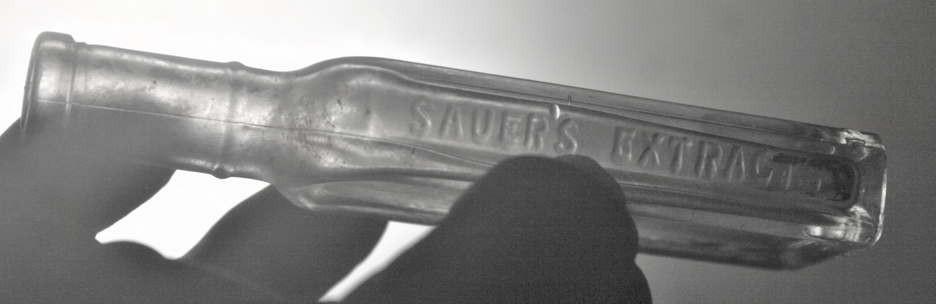
Sauer's Extract Bottle.

My metal detecting has been slowed this summer by a variety of factors, but like I always say, there is always some place to hunt and something to find.  The detectorist is always looking for clues, and clues can come in many forms.  

I've picked up some bottles this year. Conditions were right.  I've been able to find older bottles without spending much time, and by doing that I learn more about the area and where older coins and other good targets might be found.

Above is a Sauer's Extract bottle I found, probably from the 1920s or thereabouts.  I haven't narrowed the date range down yet but should be able to do that before long.

Embossing on Sauer's Extract Bottle.

It isn't a rare bottle, and unfortunately there is no glass maker's mark on the bottom.  The maker's mark often helps narrow down the date of a bottle.  It does help show what life on the Treasure coast was like in the early 20th century.  It definitely provides some evidence that there should be other items of similar age, including coins, in the area.

Below is a part of an ad that shows the same type of bottle with the paper label in place.

Sauer's Extract Bottle.
Source: See gjenwick.com link below.

Here is the link for a variety of Sauer's extract ads.

Sauer's Extract | Vintage Ads (gjenvick.com)

And here is a link for a timeline on the company.

Sauer Brands History: Founding, Timeline, and Milestones (zippia.com)

By the way, the Sauer's company is another Richmond, Virginia company.  As I've mentioned, a lot of the early 20th century bottles I've found around the Treasure Coast come from the East Coast of the U.S.  Not surprising.

---

If I hadn't hurt my foot, I'd be doing more metal detecting, but I'm hoping to get it healed up as quickly as possible and it won't help to walk long distances on a beach.

Old bottles can give you a flavor (pun) of the Treasure Coast during earlier times.  You can tell from the bottles, for example, they did more baking and food preparation at home.  That isn't surprising, but just something you can see from the bottles.

Bottles also provide information about what other types of things might be found in the area.  When you have signs of human actibity, there will likely be some coins in the area, although in this location, I'd expect no highly valuable dazzlers, yet there is always the possibility.  I'd expect some older coins, but not many, and not much of great value in this area.

It is also informative how bottles and glass move with sand, which can adds to my understanding of how objects of various shapes and densities will move on a beach.  The density of glass is not too different from that of sand, but that isn't all there is to it.  Bottles can be partly filled with water or air.  While they move pretty much with the sand, it is more complicated than that.

I found one of my first and nicest shark teeth while bottle hunting.  If you understand how items move. one type of object can give you clues to the location of other types of targets.  They will have a somewhat predictable relationship, in the same way you can expect pennies, nickels, dimes and quarters to have a rather predictable relationship when you find a coin line or coin hole.  The natural forces, or physics, remain the same.  Just some of the variables change.

---

I've almost never gone out to hunt fossils, but while looking for other things have seen them along the Treasure Coast.  

When I did go hunting fossils, I went with people that offer fossil hunting expeditions for a fee.  It is worth the price because they''ll take you right to some good spots, and they have fossil permits so you can keep what you find.  Most of those go to the Peace River, but not all.

Fossils do occasionally wash up on the Treasure Coast beaches, so if you are out there a lot you will probably see some.  There is a decent chance of finding shark teeth.  You do not need a Florida permit for collect shark teeth.  

Shark teeth on the ocean beaches aren't real common, but when the conditions are right, you might see a few, especially at some spots, such as the bend just north of  the Seagrape Trail beach access.  You have the best chance there when a lot of seashells are washing up.  

Some of the greatest concentrations of fossils on the Treasure Coast are on private property where they were dumped with sand that was moved during construction.  

Fossils are very rare in general in the Indian River, but can be found on some spoil islands, and also in some areas where it appears they were dumped during road construction along the river.  The ones on the banks are almost all on private property.

---


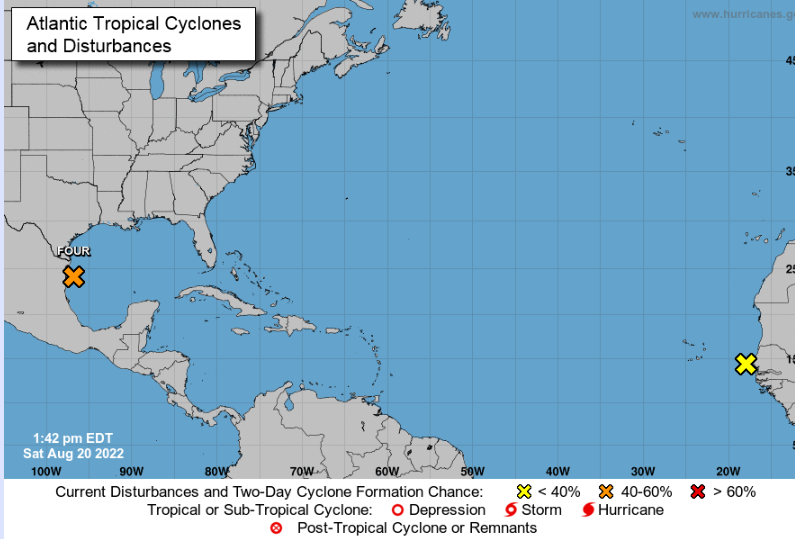
Source: nhc.noaa.gov

We're getting into the time of year when storms are more common.  It looks like they ae beginning to come off of Africa, which is usually what we see when it is that time of year..

Not tides and surf are both small.

Good hunting,

TerasureGuide@comcast.net


Saturday, August 20, 2022

8/20/22 Report - Valuable Gold Coin. Extensive Bibliography of Treasure Articles. Research Resources.


Written by the Treasureguide for the exclusive use of the Treasure Beaches Report.


Source: See Numismatic News link below.

Rare coins may be rare, but there appears to be an almost unending parade of these desirable collectibles being offered through public auctions. Behind this, of course, is that the market for truly rare coins, be they date or grade rarities, has never been stronger. Collectors, coin dealers, and investors are all vying for the same pieces, many of which have not been available in a long time and may not become available again in our lifetime...

Here is the link.

Rarities Become Commonplace - Numismatic News

---

Yessterday I talked about an extensive bibliography of treasure articles.  Many of the articles are older,  and you might have some trouble findint the original articles.  There are, however, a number that you can still find online.  You can find the archives of many of the magazines online.  Below is a link to  Time Magazine and Popular Mechanics sites that will help you out.  Some articles are difficult or impossible to find, but if you keep at it, you can find a number of them.

The TIME Magazine Vault

Popular Mechanics : Free Texts : Free Download, Borrow and Streaming : Internet Archive

Popular Machanics published a number of old articles on technologies for finding treasure, inlcuding articles on metal detectors dating back to the 1920s.  You will be able to find some of them.


Gaylen C. sent this email.

I thought I recognized the book you featured by L. Frank Hudson. It was on my list of books I was interested in at the St Lucie Co. library, so I placed it on hold and had it delivered to my nearest branch to see if was the same one. Picked up that one and a couple of others today (photos attached).

The very large cross-section  of a British man-of-war was one I had gotten previously while watching the UK tv series "Horatio Hornblower" (great series btw) for my great grandson to look at. Since at least one of the 1715 Plate Fleet was a captured English man-of-war I thought it complimented the 18th century ship thesis you mentioned. Have to go to the kid's section for that one. I've included a book list from just one of my searches through the SLC Library catalog. I wonder if they know this book they are loaning out could sell for so much.

Gaylen

St. Lucie Library Treasure Book Listings
Found by Gaylen C.


Submitted by Gaylen C.

Libraries can be helpful.  Don't buy an expensive book if you can look at it free, then you can decide if you really want to buy it.  

Besides the hardcopy books you will find in the library, librarians can help you search for items online.

Thanks Gaylen.

---

Source: nhc.noaa.gov

As I've been saying, the Atlantic is hearing up, but nothing much has developed yet.  It might be just starting.

The tides aren't big now, and the Treasure Coast surf is around two feet.

I' hurt mhy foot.  Don't know if anything is broken, but have been resting it, so I haven't been out to hunt.

Good hunting,

TreasureGjuide@comcast.net


Sauer Brands History: Founding, Timeline, and Milestones (zippia.com)

Friday, August 19, 2022

8/19/22 Report - One Man's Story of the Early Days of Treasure Salvage Including the Treasure Coast, and A Huge "Treasure" Research Resource.


Written by the TreasureGuide for the exclusive use of the Treasure Beaches Report.


In the Wake of the Golden Galleons 
by Roy Volker and Dick Richmond (1976)

In the Wake of the Golden Galleons by Roy Volker and Dick Richmond (1976) is a book that is very different from the Frank Hudson books I recently mentioned.  It is narrative by Volker about how he got involved in treasure hunting and the people, events, wrecks, and treasures of his career in treasure hunting.  It actually starts before he was involved in treasure hunting, He came to Fort Pierce, like many young men, for training exercises during WWII.  

This book provides some early history on Florida treasure hunting but reads more like a biographical novel.  It is the kind of book you can happily read from the first sentence to the last and enjoy the entire book, while at the same time learning a good bit about the history of treasure hunting.

You can find that one online for a reasonable price.

When I started metal detecting I read most everything I could find on treasure hunting and still have a lot of the books and magazines around.  I'll tell you about some of them from time to time - especially the old classics.

Here is another one of those books, but it is an entirely different kind of book.   The title is Treasure


Treasure Hunting Bibliography
 by John Reed.

Treasure Hunting Bibliography and Index to Periodical Articles by John Reed (1989) certainly isn't a classic, and it is an entirely different from the kind of book I described above. You would not sit down and read this one from cover to cover, but it is a great research resource that can be very helpful. It is a "bibliography of over 5,200 periodical articles about treasure hunting, lost mines, sunken and buried treasures and related subjects." Being published in 1989, the articles were obviously written before 1989. The articles are not from the popular treasure magazines such as Lost Treasure and Western and Eastern Treasures, but come from sources that you would be less likely to search first, such as academic journals and non-treasure periodicals of general interest. The book includes 425 jam-packed pages.

Being published in 1989 you might think it is outdated, but don't let that fool you.  I'll explain more about that some other time.

For a few examples, I saw articles on the obvious topics such as the Titanic, Atocha and Oak Island, but also articles on metal detectors from as far back as the 1920s; various mines treasures and shipwrecks you probably never heard of, 

You might think these old publications are impossible to find.  That, however, is not always the case.  I just searched for a 1953 issue of Life magazine that had an article of interest and quickly found it listed online for around $9.00.  Other journals have old issues listed online, but most all can be found by going through a good library.

But you don't even have to find the specific article listed in the bibliography.  Do a search using teh same seearch terms, and you'll probably find the same and more updated information.  Maybe you've never heard of the Bear River Loot or Black Burro's Gold.  Now you have.  You can find out more about them in issues of True West and The Cattleman.  If you can't find old issues of True West or The Cattleman, you can still do a google search and find out about them.

I saw one title Finding Gold With A Camera, and did a google search.  Interesting things came up, including how to photograph precious metal finds and how to use FLIR to find treasure in walls.  the old sources can lead to more up to date information if you simply use the titles as search terms.  

Here is another example I noticed in the bibliography.  Treasure Fleets of Spain in the 16th Century published in Gentleman's Magazine, vol. 37, 1886.

The Gentleman's Magazine was a monthly magazine founded in London, England, by Edward Cave in January 1731. It ran uninterrupted for almost 200 years, until 1922. It was the first to use the term magazine (from the French magazine, meaning "storehouse") for a periodical. Samuel Johnson's first regular employment as a writer was with The Gentleman's Magazine.

To sum it up, it is a valuable research resource, but is not easy to find. My first search did not reveal any copies currently available on Amazon.

---

If you thought I was wrong when I called for the firing of Fauchi and Birx, you might want to think about apologizing.  As soon as they put out that stupid model and attributed its predictive inaccuracy to the benefit of the population "doing a good job" by wearing masks, things were going seriously wrong.  Now the CDC director is admitting "she will make major modifications to the agency’s structure, including staffing changes and efforts to improve public messaging, after she said the agency failed to adequately respond to the Covid-19 pandemic."   That is a positive move, but it won't be nearly enough.  

Here is the link.


---

As I said yesterday, the Atlantic is getting a little more active even though you only see a little development of one system on the NHC map.

Source; nhc.noaa.gov.


The tides are more moderate and there is the slightest increase in the Treasure Coast surf.

Good hunting,
TreasureGuide@comcast.net
Wednesday, August 17, 2022

8/18/22 Report - Ancient Gold Ring Found in Lot of Costume Jewelry. Piso Bottle. Detecting Clues Revealed by Drought. Brain Death.


Written by the TreasureGuide for the exclusive use of the Treasure Beaches Report.

Source: ArtNet News (link below)

A Woman Bought a Pile of Cheap Costume Jewelry Online. Turns Out It Contained a Rare Viking-Era Gold Ring.

Heskestad had an inkling the twisted gold ring was something unique. “It was really heavy, and shiny,” she told the newspaper Bergansavisen BA, “It looked very special.”...

But instead of bringing it straight to a dealer or auction house to cash in, she delivered it to the municipal cultural heritage department of Vestland County, in Western Norway. Karoline Hareide Breivik, the acting head of the department, confirmed in a statement that the ring dated to the late Iron Age or Viking Age. She noted that the find was extremely rare; it also marked the first time she was aware of a ring from the Scandinavian Viking Age having been found in an online auction....

Here is the link.

A Woman Bought a Pile of Cheap Costume Jewelry Online. Turns Out It Contained a Rare Viking-Era Gold Ring | Artnet News

I wonder if they just threw the gold ring in the pile of costume jewelry because it was not marked gold.  That can be an easy mistake to make.

---

Here is a brown embossed Piso Vo. bottle found on the Treasure Coast.

Here is a Treasure Coast Bottle Find: Piso's Consumption Cure.
Top photo embossing: TRADE PISO'S MARK.
Bottom photo embossing: PISO CO. WARREN PA. U. S. A.


The bottle shows two large bubbles indicating that it is a blown bottle. Unfortunately, there is not a maker's mark on the bottom.  The maker's marks can really help narrow down the date of a bottle.

Talbott’s original formula for Piso’s Cure included opium and possibly other morphine derivatives. But the immediate post-Civil War era brought a revulsion against those drugs as many returning veterans had developed addictions to them as a result of treatment for their wounds.  Although Congress only later outlawed opium-derived ingredients in patent medicines, the Trio saw the ban coming and by 1872, according to company literature, eliminated opium and morphine from Piso’s ingredients. They later won a lawsuit on that score. The medicine still contained cannabis (marijuana), chloroform, and alcohol, but Piso’s label did not mention them.

Below is a trade card image advertising Piso's cure for consumption and catarrh.


Whether it was the effects of the Great Depression or the 1937 passage of the Marijuana Tax Act, effectively barring cannabis in medicine, Piso’s corporate life ended before World War II...

Here is a link with much more information on the Piso company and its medicines.

BandE_Pages_1-24.pmd (fohbc.org)

A lot of the early 20th century bottles are medicine bottles. 

---


A stately home's "ghost gardens" have become visible after the recent extreme heat.

Grass on parts of Longleat's baroque garden in Wiltshire has dried out to such an extent it has revealed historic features long buried in the landscape.

New overhead drone images of the imprints show what the grounds would have looked like in the 17th Century.

The parch marks have been described as an "invaluable window" into the site's history...

Here is the link.

Longleat's 17th Century gardens revealed by heatwave - BBC News

Drought can provide opportunities for the alert detectorist.  The above article describes one way that a drought can reveal clues to the past. 

Drought can also drop water levels and provide easy access to previously submerged lands.

---

I was reading the University of Louisville alumni magazine and saw an article on the brain waves of a dying person being observed and recorded.  The fact was heralded in the magazine and many other places as being something really amazing.  I was not impressed at all.  Despite the way it was presented, in my opinion they learned next to nothing, other than perhaps that brain waves  immediately befoire and after the time of death are somewhat similar to those of common states such as dreaming or meditation.

(See A replay of life: What happens in our brain when we die? - Science & research news | Frontiers (frontiersin.org))

Who would expect all organs to shut down simultaneously?  I wouldn't, and I don't find it all surprising that the brain continued a short time after the heartbeat and respiration ceased.  They evidently did not use the concept of "brain death" which has been an important concept since at least1968.  If death was determined by brain death, the person recorded wasn't yet dead.  And if you used criteria such as respiration and heart rate to determine the time of death, why would you expect the brain to shut down at precisely the same moment as those other functions?

Furthermore, they tried to suggest that the brain waves observed during those last moments to the types of consciousness often reported as the result of near-death experiences, such as seeing loved ones or your life passing before your eyes, but I am very skeptical of any attempt to tie correlate brain waves or EEG patterns with the contents of consciousness being experienced by a living or dying human being.  And they admitted this was a special case with the patient having neurological abnormalities.  Also, don't forget that correlation does not mean causation.  There are other possible relationships between brain activity and reported mental states.

So overall, I didn't find it surprising or informative that the brain did not shut down simultaneously with any other physiological measures used to define the state of death, AND, I find any hypothesized relationship between experienced consciousness and brain waves tenuous, at best.  Bottom line the entire thing is much ado about nothing.  

The common interpretation is that brain activity causes experiences of consciousness.  That is not necessary, and in my opinion, there is a more empirical way to look at it.

I was hoping to learn something interesting from the article because I am very much interested in the topic, but found the article, which you will see mentioned all over the internet now, as very disappointing.   Secondly, it illustrates the current state of journalism, which is poor.  They can get away with that because people much of the population does not read critically.  Perhaps there is just too much out there, but reading today, like much of modern discourse, is more about feelings than thinking, which allows journalism, as well as thought in general, to be imprecise and sloppy.  Almost anything can be put over on a large segment of the population.

---

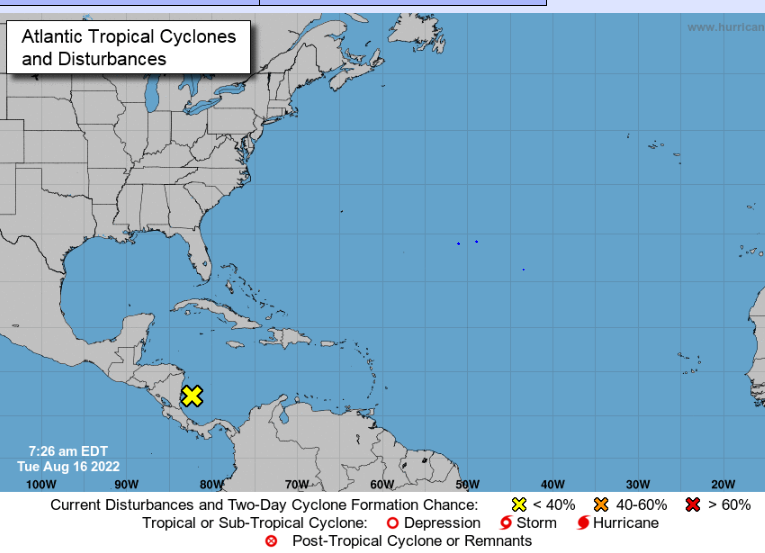
The National Hurricane Center map shown below doesn't really show it, but the Atlantic is hearing up, but there is still no real threat of significant storms in the next few days.  By the way, have you noticed how the TV weather now calls every little rain a storm.   I guess it gets more attention.


Source: nhc.noaa.gov

There is that one little system that could develop, but that is about it for now.  Don't expect any big changes in the next couple of days.

Good hunting,

TreasureGuide@comcast.net


8/17/22 Report - 169 Buried Gold Rings Found. Metal Detecting Estimates, Probabilities and Decision Making.


Written by the TreasureGuide for the exclusive use of the Treasure Beaches Report.

Source: See Artnet News link below.

Archaeologists have made a stunning find inside a prehistoric grave in Romania: a cache of 169 gold rings, some 800 mother-of-pearl beads, and an ornate spiraled copper bracelet.

Rings in Situ.
Same Artnet source.

“The gold hoard is a sensational find for the period, considering that all the gold pieces from the Carpathian Basin total around 150 pieces. Well, here there are over 160 in just one inventory,” Ghemis said.

Archaeologists identified the remains as belonging to a woman based on the size of the skeleton, and the fact that there were no weapons buried in the grave. The gold rings would have likely been used to adorn her hair...

Here is the link.

Archaeologists Have Uncovered a Vast Trove of Gold Rings Buried Alongside an 'Extremely Rich' Ancient Noblewoman in Romania | Artnet News

===

You might remember that I mentioned Frank Hudson's book, Florida Shipwreck Treasures.  In response, here is what Warren D. had to say.

I have a copy of Florida Shipwreck Treasures by Frank Hudson, the 3rd edition, the Expanded Edition as well as Treasure on the Chesapeake Bay by Bob Trevillian and Frank Carter, publ. 1983. 

I guess I acquired them back in the 90's. They came with a bookmark which is an old Post card called Treasure Map of the Florida Keys, probably from the 80's and printed in Ireland, of all places.

Time flies and it's worth mentioning these books do contain tidbits of information on old beach locations that is not on internet forums. Believe me I would find it.

Good reason for the younger generation to go back and read books?

Warren D.

---

Gaylen C. said the brass mystery item I posted is a latch from a suitcase.  It does look like one.   I don't know what one of those would be doing where it was found, but that isn't unusual.

The brass hinge or latch is pretty big and gave a very strong signal.  I could tell that it was a stronger signal than I'd expect out of a regular size coin.  If I was going for common coins, I could have left that one in the ground, but I was curious.

---

Here is another piece of recently found blue and white china.

Another Piece of Blue and White China.

I've been finding a good bit of that lately.  

---

It is not always deliberate, and it is never precise, but detectorists are constantly assessing probabilities and making decisions based upon their estimates.

When it comes to dig/no dig decisions, your estimates of the probability of junk versus good targets helps determine what you dig.  One thing that I think is often underestimated is the huge difference in the value of different good targets.  A good diamond ring, or some other high value object can be worth thousands of times what a common coin is worth, so when there is a decent likelihood of the presence of such a high value target, that needs to be taken into account.  Of course, now we are talking about economic values alone, which are fairly easy to quantify, but you might consider other things such as the historic value or just your curiosity.

Lets say you are working in an area where you have reason to believe there is a decent chance of a $10,000 coin or ring.  That ring is worth 100,000 common dimes, so when you decide to dig or not dig a questionable target, that should be taken into account.  Also taken into account will be any target ID information you have, which changes your estimate of the probability of the target.  When there is a remote possibility of a very high value target, you will probably be willing to dig a lot of junk instead of taking a chance on missing the high value target.

If I took the time I could probably come up with some equations and charts that show the effectiveness of various decision strategies, but I'm not up for that right now.

Your expectations are likely to determine to a large extent how much junk you are willing to dig.  Even if there is a ton of junk, you might be willing to dig a lot of it if there is a better chance of digging a high value target.  It seems that many people, though, are more motivated to not waste time digging junk even when the probability of missing something really good is fairly high.  That has to do with personal characteristics and preferences, which can lead to the adoption of less than optimal decision making.  Just give it a little thought.

Here is an old post on math for metal detecting.  I'd change a few sentences of that post and may have done so in subsequent posts.


---

No important changes in the weather or predictions.  The tides are not as big.

Good hunting,
TreasureGuide@comcast.net

Tuesday, August 16, 2022

8/16/22 Report - Thesis on 18th Century Ship Interiors. Spanish Colonial Florida. Brass Hinge Find. Raging War.


Written by the TreasureGuide for the exclusive use of the Treasure Beaches Report.

Illustration from Eighteenth-Century Merchant Ship Interiors, a Thesis by Mary Ann Renner.
See link below.

You don't see much on old ship interiors, but here is a good one that you might want to browse.  It might give some idea of where things were placed or stored, and therefore where they might end up.  

Here is the link.

Renner-MA1987.pdf (tamu.edu)

---

In 1513, a free and literate African named Juan Garrido explored Florida with a Spanish conquistador, Juan Ponce de León. In the following decades, Africans, free and enslaved, were part of all the Spanish expeditions exploring the southern region of the United States. In 1565, Africans helped establish the first permanent European settlement in what is St. Augustine, Florida today...

These Catholic Church records show that everyone was treated in theory as "brothers in Christ" and that the Church helped incorporate Africans into Spanish communities. It also helped free some slaves.

St. Augustine’s Catholic records show that after English Protestants established a settlement in what became South Carolina in 1670, their African slaves began to flee southward seeking admission into the "True Faith" – which to the Spaniards meant Catholicism.

Florida’s Spanish governors sheltered them and saw to their religious conversion, seeking royal approval of their actions. After some deliberation, in 1693, Spain’s monarch ruled that all slaves fleeing Protestant lands to seek conversion in Catholic colonies should be freed. Word of the fugitives’ reception in St. Augustine spread quickly through South Carolina, generating bitter complaints among planters and encouraging additional southward escapes by their slaves...

Here is the link for more about that.

What Catholic Church records tell us about America's earliest black history (yahoo.com)

--

I mentioned that I recently ran a metal detector through an extremely junky area.  Here is one item I picked out of the other junk on that outing. 

Brass Hinge Find.

When I found it, it was encrusted and stuck together in the position shown on the left above.  It looked a little like a cross.  After I cleaned it and opened it up, I saw it was a hinge.  Don't know what kind though.  Very nicely and precisely constructed.  No manufacturer marks or anything like that at all.

---

Just as the AR-15 rifle has become a sacred object for Christian nationalists in general, the rosary has acquired a militaristic meaning for radical-traditional (or “rad trad”) Catholics. On this extremist fringe, rosary beads have been woven into a conspiratorial politics and absolutist gun culture. These armed radical traditionalists have taken up a spiritual notion that the rosary can be a weapon in the fight against evil and turned it into something dangerously literal...

From The Extremist Gun Culture Trying to Co-Opt the Rosary - The Atlantic


The author mistakes most everything about the nature of the war, but her fear of a "weaponized" rosary shows that she sees herself as being at war and tells which side she is on.

I wonder (sarcastically) if she is also afraid of the crucifix, garlic and mirrors, not to speak of the wild gangs of nuns roaming the streets of New York intent on assautling violent criminals with their AR-15s and rosaries.

If you read the Atlantic article, to be fair, you might want to read at least the short version of the other side.  Here is one choice.

Winning The Invisible War
by E. M. Bounds.
---

Source: nhc.noaa.gov

One more little pop-up down by Central America.  

Still some pretty good tides, along with a nearly flat surf.

Good hunting,
TreasureGuide@comcast.net.

Monday, August 15, 2022

8/15/22 Report - A Book Treasure. Long Distance Bottle. More Discussion On Metal Detecting with Discrimination.


Written by the Treasureguide for the exclusive use of the Treasure Beaches Report.

Clip From Amazon Listing.

Yesterday I mentioned some shipwreck sites from a book by Frank Hudson.  The book is entitled Florida Shipwreck Treasures.  I received an email from Chris H. asking if I ever checked out the cost of that book.  So I did, and above is what I found.  The book is listed on Amazon for $1500.  That is surprising.  I guess I should check out the prices on some of my other books.

I was once very much involved with antique and collectible books, and once published an article entitled Treasure Books and Book Treasures in one of the popular treasure magazines of the past.  There are antique books and fine first editions worth a lot, but I never imagined this Hudson book could bring that kind of money.  There aren't many copies listed online, so if somebody wants a copy at a reasonable price, they might have to do some searching.

---

In my 8/4/22 report, I published a photo of an embossed bottle that had the words Long Distance embossed on the shoulder and A. M. Dodge Co. on the heal.  

See Treasure Beaches Report: Pt. 2. (2020 and Beyond): 8/4/22 Report - Couple Small Religious Metal Detector Finds. Super Moon. Long Distance Bottle. Storm Dust Buster. (tbr2020.blogspot.com)

DJ found some information on the A. M. Dodge Company.

The Dodge was a cyclecar manufactured in Detroit, Michigan, by the A.M. Dodge Company from 1914 to 1915. The cyclecar had a four-cylinder 25 hp engine that was water-cooled, and had a frictionless transmission. The vehicle was designed by George Wahl of Wahl Motor Company.The company was later sued by the Dodge brothers in 1915, who claimed that their name had been infringed.

DJ thought that maybe the A. M. Dodge Co. Long Distance bottle held some kind of promotional drink.  I have no better guess.  Long Distance could suggest a quality of the cyclecar.  I also wonder if it might be for something other than a drink despite the fact that it does look like a soda or beer bottle.  Could it be a bottle for oil or coolant or something like that.  That doesn't seem to me very likely, but I just don't know at this point.

The time period of the cyclecar does look like it could match up fairly well with the age of the bottle.  Still a mystery.

---

Yesterday I talked about using discrimination.  I decided to add to that today.  

When your metal detector provides a single knob to control the amount of discrimination, as was common in the past, the important thing is to know where the most desirable targets would fall on the range and making a prudent decision on the amount of discrimination to use.  Again, on a beach, especially a frequently detected beach like many of those on the Treasure Coast, the best decision, in my opinion, would be to dig everything, but when the situation requires discrimination, the more you know about the type and quantity of items likely to be found and the more you know about how your metal detector's discrimination works, the better decision you can make.

When, however, your metal detector provides conductivity numbers, as is the case these days on many modern metal detectors, it is important to be familiar with the numbers produced by the most common good AND junk targets.  I've posted some experiments on that type of thing in the past.  

Besides knowing the numbers produced by common coins, to make the best dig/no dig decisions, it is best to know the numbers produced by common junk items.  How does a smashed aluminum can sound?  What numbers do fishing sinkers and spoon lures usually produce, etc.?  You probably know that those types of items can produce a range of numbers.  In the case of sinkers, some of them will produce numbers that are the same as some modern coins.  Even though we typically know the numbers of pennies, dimes, nickles and quarters (some of the most common targets), as I've explained before, those are seldom your most sought targets.  So, if you confine your digging to those, you will likely miss more desirable targets, such as watches, a good number of gold rings, etc.  

A factor that I consider, but have never noticed written elsewhere, though admittedly I don't read much of what other people are saying, is the amount of time it takes to get a good reading.  Some people claim that it takes them virtually no time to glance at the numbers and make a decision, but when I have seen YouTube videos in which people are trying to make a target ID from the numbers, it takes a good while to get a good reading and make a decision.  If it takes you that long, you could often save time by simply digging the target and getting it in your hand.  When I try to use the conductivity numbers, I often find myself making multiple sweeps over the target and standing there taking time reading the varying numbers.  That takes time.  I often feel that I'd be better off digging the target and knowing what the item is rather than standing there trying to figure it out before digging.  

But most recently I was metal detecting a large area totally covered by so much trash it was impossible to dig everything.  I was doing that more as an experiment.  I didn't really expect to find anything good but wanted to see if I could use the numbers to pick through the trash for whatever good targets might be there.  In that case, I defined "good" as some type of coin or jewelry.  I have been able to pull a few coins out of that kind of trash before.  It wasn't really worth the effort, other than what I learned from the exercise, but you never know when you might get a surprise.

Now, after all of that, here is some practical advice.  The conductivity numbers in very high trash areas. where there is a very large amount of trash and very few good target and probably none of high value, aren't very useful.  There are too many junk items that produce numbers that are the same as common coins.  However, there are some other clues you can get from your metal detector signal besides the numbers.  Use those other clues too.

You can obtain useful information from the sound of the signal.  Many junk targets will produce very loud signals as compared to better items like coins or small gold rings.  To pick the better items out of the junk, you might concentrate on the smaller and softer signals.  That is similar to how people hunting for older coins might concentrate on weaker signals hoping to find the deeper coins as opposed to the more modern coins near the surface.

Also, try swinging the coil from various different directions.  You can often determine if the target is roundish or not.  If it is round like a coin, it will give a consistent signal when sweeping in different directions.

Those two things used along with the conductivity numbers will help you make better dig decisions when there is really a lot of junk.  You might want to clear some of the junk.  Perhaps use a rake or big magnet. Think of that as site preparation.  Or maybe dig and remove the obviously bigger junk targets.  And consider alternative techniques such as sifting.

A smaller coil might be helpful too.

On an ocean beach, when you find tons of junk (especially "lighter" junk, as much as I hate to use that adjective) that will often be a sign that you are in the wrong place anyhow, so you might want to move on.  There is likely a better place to detect.

If you don't expect to find any items of high value, the biggest benefit of working in a high junk environment might be what you learn from the process.  It does provide good practice and what you learn might come in useful someday.

---

Source: nhc.noaa.gov.

Looks like the Atlantic is becoming a little more active.

We are still having a small surf along with some good tides.

Good hunting,

Treasureguide@comcast.net


d